 Integrated Polishing System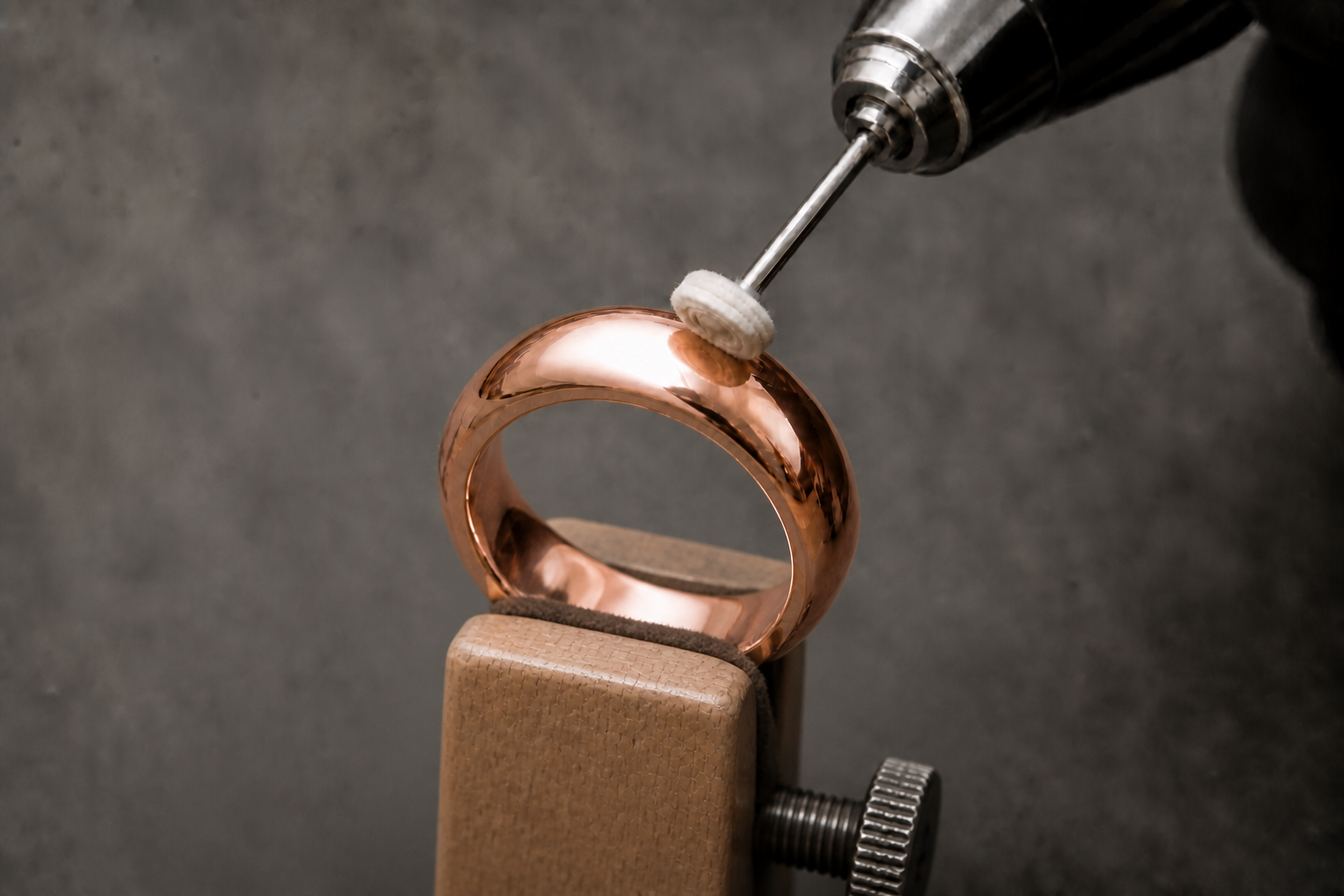
This workflow applies only when the electroplated layer system has been identified and its thickness, continuity, adhesion, and present condition make mechanical polishing suitable. LUXI Green performs a conditional low-temperature task on the coating; this is not the general LUXI Green speed and not a universal first or finishing stage.
Before the polishing test
Before contact with LUXI Green, complete item geometry, necessary repair, and appropriate abrasive preparation. Polishing must not be used to correct shape, deep scratches, cracks, open cavities, or unfinished repair.
Identify the coating system and check:
- electroplated layer type;
- sufficient thickness for mechanical polishing;
- continuity;
- adhesion to the substrate;
- absence of lifting, cracks, and unstable areas;
- condition of edges, relief, joints, and areas near inserts.
If the layer system is unknown, do not begin until it has been identified and found suitable for mechanical polishing.
Where to establish the working conditions
Prefer a separate sample with the same substrate and electroplated coating. If no suitable sample exists, use a non-critical area only when item risk has been assessed and is acceptable.
Do not transfer the result from one area automatically to another item, another coating thickness, or another layer system.
Wheel and operating conditions
Use a separate clean standard wheel. The exact fabric type for this branch has not been established, so do not substitute a small stitched cotton wheel, flex-shaft buff, muslin, Calico, flannel, or another fabric automatically.
Use approximately 1000 rpm for this branch. This value applies only to a standard wheel in a deliberately low-temperature operation on a suitable thick stable electroplated coating.
Apply LUXI Green minimally. Use very light pressure, short contacts, continuous temperature control, and cooling pauses. Keep the item moving relative to the working surface.
If action develops slowly, do not increase pressure, LUXI Green loading, or continuous contact duration. Stop and recheck preparation, wheel condition, actual rpm under load, contact area, and coating suitability.
Washing and inspection
After a short series of contacts, move the item completely away from the wheel and allow the surface to cool. Completely wash away residue from LUXI Green and removed material, then inspect the test area under directed light.
A compatible washing solution may be used. LUXI iClean is recommended as the most compatible option because it is designed around LUXI compound chemistry, supports gentler washing conditions, and helps preserve surface stability after polishing. Other compatible washing solutions may also be used. Ultrasonic washing, heated solution, and steam treatment require whole-item eligibility.
Accept the working conditions only when, after cooling and washing, the coating retains:
- even lustre;
- its original uniform colour;
- thickness without local thinning;
- stable adhesion;
- an even surface without clouding, smearing, or waviness.
Record the wheel, rpm, LUXI Green loading, pressure, contact duration, cooling pauses, washing method, and inspection result.
Stop immediately
Stop polishing immediately if any of these appear:
- colour change;
- local thinning;
- exposure of an underlying layer or substrate;
- clouding;
- smearing;
- waviness;
- cracking;
- loss of adhesion;
- overheating;
- any other unstable coating change.
Do not attempt to correct such a result with more LUXI Green, stronger pressure, or longer contact. Return the item to coating assessment and a decision on restoration or replating.
Outside this workflow
Do not transfer this branch to thin decorative or protective coatings, flash electroplating, PVD, CVD, e-coat, or other thin layers that must be preserved. Do not use it on an unknown coating or make it a required stage in another LUXI sequence.