
 Integrated Polishing System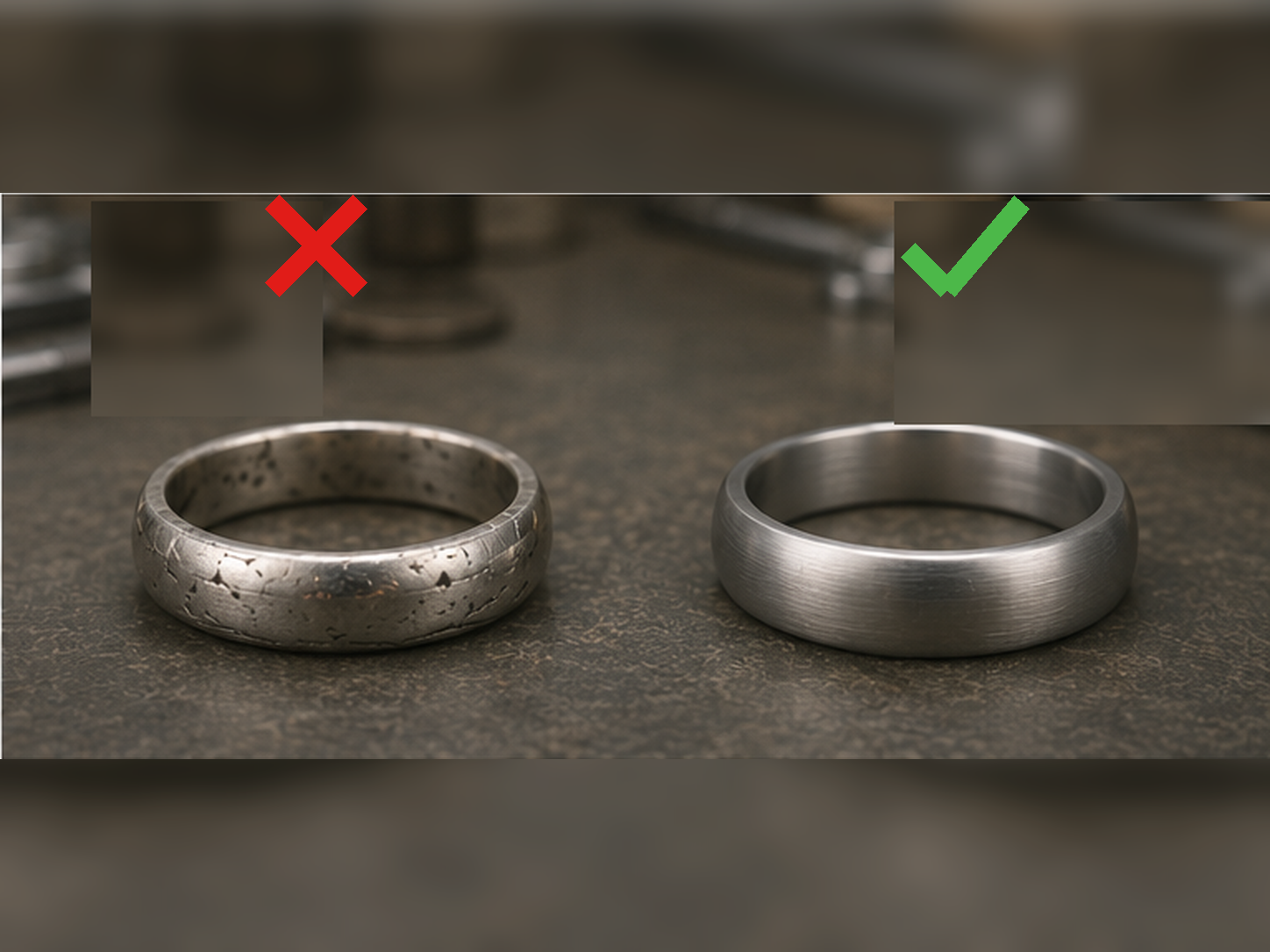
Before the first polishing stage begins, the surface must be prepared well enough for the compound and wheel to form the surface, not to perform the work of sanding, repair or defect correction.
When this workflow is needed
Use this workflow before choosing a LUXI compound and starting polishing.
Typical cases:
- an item after sanding or abrasive preparation;
- a surface with visible scratches or process marks;
- an item after casting, soldering, repair or assembly;
- a large planar surface where waves and preparation marks are especially visible;
- an item with relief, settings, prongs, porosity or hard-to-reach areas;
- a situation where polishing started too early and the surface became shiny but uneven.
What to check
Before polishing, check:
- deep scratches;
- coarse abrasive preparation marks;
- waves and geometry distortion;
- burrs, sprues, protrusions and sharp edges;
- porosity and casting defects;
- soldering, welding or repair marks;
- areas where coating, enamel, stones or inserts may be sensitive to mechanical work.
If a defect belongs to shape, construction, soldering, casting or deep preparation, it must be corrected before LUXI polishing.
Main logic
The first LUXI polishing stage must work on an already prepared surface. Its task is to remove scratches from abrasive preparation and form a smooth metal surface layer.
If the surface is too coarsely prepared, the operator will try to compensate with pressure, time or amount of compound. This increases metal removal, reduces geometry control and can create shine on an uneven surface.
It is better to return to surface preparation than to force polishing to correct what should have been corrected earlier.
How to work
Inspect the item under good light. Divide the issues into two groups:
- Defects that must be corrected before polishing.
These include deep scratches, waves, pores, casting defects, burrs, protrusions, shape errors, repair marks and coarse preparation marks.
- Marks that the first polishing stage should remove.
These are controlled scratches from completed abrasive preparation, where the shape and geometry of the item are already ready for polishing.
After that, choose the first LUXI polishing stage only when the surface is truly ready.
What LUXI must not replace
LUXI must not replace:
- soldering repair;
- laser welding;
- shape correction;
- removal of coarse casting defects;
- correction of deep porosity;
- a decision to reject or remelt an item;
- removal of old or problematic coating without separate risk assessment.
Next step
If the surface is ready for polishing, proceed to “Basic LUXI production route for first-group materials” or another suitable route.
If the item has a large planar surface, use “Large planar surfaces: intensifying the first polishing stage.”
If the wheel is dirty or too much compound is being used, use “Wheel preparation and minimal LUXI compound application.”