 Integrated Polishing System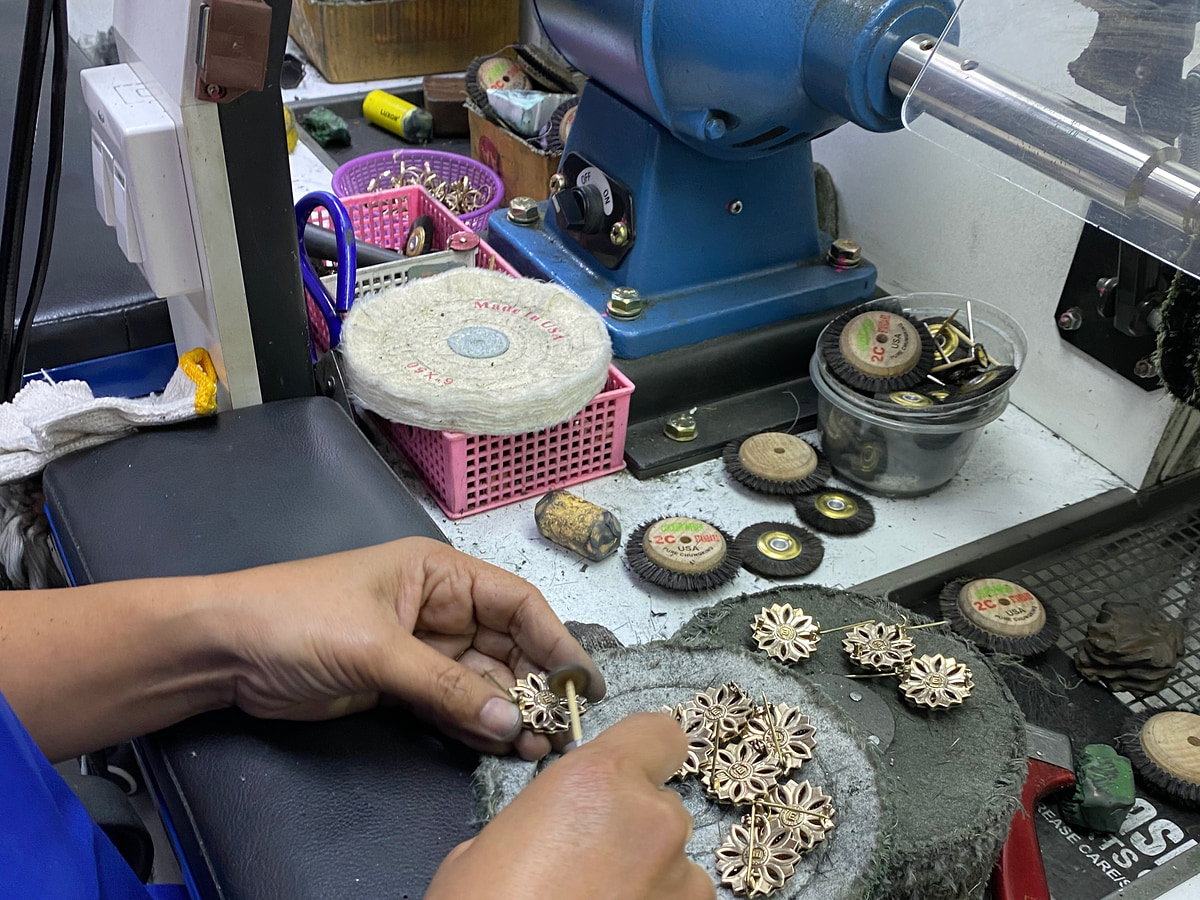
All recommendations on this site refer to original LUXI bars and the workflows built for them. They should not be automatically transferred to other manufacturers’ products by colour or appearance.
Where the LUXI system complements standard polishing
Modern jewellery production increasingly creates difficult surface conditions: casting, 3D prototypes, powder-based production, metal 3D printing, complex relief and castings with stones.
In these cases, ordinary polishing often becomes a fight against defects that are not only on the visible surface. The surface may contain fine porosity, surface-connected defects, chemically altered areas, weak zones or defects that continue deeper into the metal.
Traditional abrasive polishing often follows one logic: remove more metal until the visible defect disappears. On difficult surfaces, this may not solve the problem. As more metal is removed, new defects may open, geometry can be lost, and removal and irreversible metal loss increase.
The LUXI system approaches the task differently. The goal is not simply to cut more metal away. The goal is to prepare the surface correctly and then form a more stable near-surface layer through a controlled first polishing stage.
The basic sequence
A reliable LUXI workflow follows a sequence.
First, shape and major surface defects are corrected during abrasive preparation. The LUXI system does not replace sanding, filing, correction of geometry or removal of gross defects.
Then comes the first polishing stage. This is where the LUXI system forms the surface. It removes scratches from abrasive preparation, reduces the visual expression of shallow surface-connected defects and helps create a smoother, more continuous surface layer.
Only after the surface has been formed does finishing begin. Finishing does not replace the first polishing stage. It smooths and stabilizes the already formed surface and brings the item to its final lustre.
After polishing, the item must be washed correctly. Aggressive ultrasonic washing, excessive solution temperature, aggressive degreasers or too long a time in the ultrasonic bath can damage the formed surface layer.
What is needed for first tests
For first tests, use a controlled and simple setup:
- a correctly prepared surface;
- a clean white stitched muslin wheel;
- minimal application of LUXI Blue;
- short controlled passes;
- visual checking after washing.
LUXI Blue must touch the wheel, but it must not visibly colour the wheel blue. If the wheel looks blue after it stops, too much compound has been applied.
The correct sign is that the bar has been touched lightly, while the wheel remains visually clean. During work, the working face may become grey from contact with metal. If the wheel becomes black, greasy or overloaded, clean it with an abrasive stone before applying fresh compound.
Why not start with the strongest option
A common mistake is to start with too much compound, too much pressure or the most aggressive compound-and-wheel combination.
In the LUXI system, this is usually the wrong direction. More compound does not make the process more correct. It can prevent the wheel from working directly with the metal, increase removal, make washing more difficult and reduce geometry control.
The correct starting point is control: prepared surface, clean wheel, minimal compound and observation.
What to check during the test
A first test should answer several questions:
- does the wheel remain clean and controllable;
- does the surface become clearer after short passes;
- do scratches from abrasive preparation disappear;
- does the surface remain stable after washing;
- does the item require a stronger first polishing stage;
- is finishing being asked to solve a problem that belongs to the first polishing stage.
If the surface becomes cloudy, the wheel darkens quickly, compound accumulates in relief or the result becomes worse after washing, the process should be checked before continuing.
First useful links
- Wheel preparation and minimal LUXI compound application
- Basic LUXI production route for first-group materials
- Why the wheel is the working body in the LUXI system
- Difference between the first polishing stage and finishing
- Washing after LUXI polishing
Main takeaway
The LUXI system works as a sequence.
The result depends not on compound colour alone, but on surface preparation, a clean wheel, minimal compound, a correct first polishing stage, finishing, gentle washing and checking the surface after washing.