

 Integrated Polishing System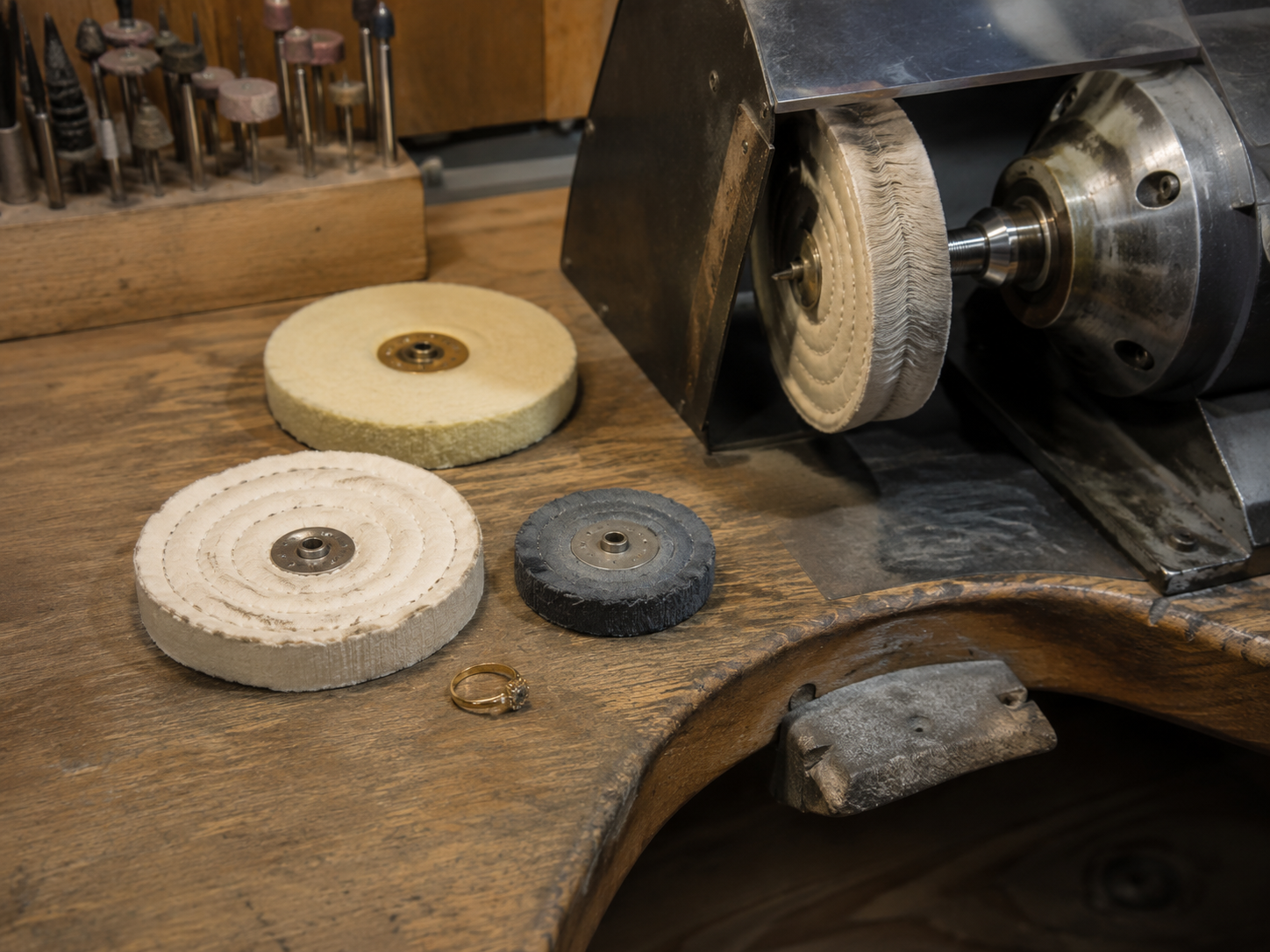
This workflow describes how to develop a repeatable polishing route when a workshop has only a limited set of wheels, small tools, and available speeds. Those limits are recorded as test conditions, but they do not permit overloading the process with excess pressure, excess compound, or prolonged continuous contact.
Use LUXI Sample Assortment as a comparison and process-development set on the actual materials, tools, and speeds available in the workshop. It is not a mandatory sequence of every sample and it does not define one universal starting compound.
Before the test
Begin only after the test zone has:
- identified material;
- completed repair and geometry;
- appropriate abrasive preparation;
- a safe test zone, separate sample, or non-critical area when item risk is material;
- a clean wheel or small tool that is actually available in the workshop.
A finishing or comparison compound must not be asked to correct a deep scratch, open cavity, unfinished shape, or skipped preparation stage.
Record the starting conditions
Before each comparison, record:
- material and starting preparation;
- zone geometry and contact area;
- wheel or tool;
- wheel or tool diameter;
- rpm or actual speed;
- pressure;
- compound loading;
- pass duration and pass count;
- temperature or heat response;
- compound-removal method and inspection sequence.
When fixed rpm is transferred to another diameter or small tool, linear surface speed and contact change. That result is not a direct repeat of the previous test.
Change one variable
Change one variable at a time.
You can compare two compounds while keeping material, preparation, wheel, rpm, pressure, compound amount, and contact time the same. You can compare two suitable wheels while keeping the compound and other conditions unchanged.
If compound, wheel, pressure, and duration all change at once, the result cannot be assigned to one cause.
Limited tooling is not compensated by force
Missing wheel, tool, or speed capability must not be compensated by excess pressure, excess compound, or prolonged contact.
Do not mix incompatible compounds on one working body. Use separate clean tools for different compounds, or use a confirmed tool cleaning or replacement sequence. Transferring a contaminated wheel between compounds makes the comparison invalid.
If the available tool cannot perform the required role, stop the test and record the workshop limitation. Sometimes the correct test result is that the task needs a different wheel, a different tool, a different motor, or a return to preparation.
After each pass
After each short test pass, remove compound and removed material, allow the zone to cool, and inspect it under consistent directed light.
Evaluate not only immediate lustre, but also:
- preservation of geometry and edges;
- removal or persistence of preparation marks;
- haze, waviness, and smearing;
- overheating or colour change;
- contamination in relief, recesses, and joints;
- stability after compound removal.
LUXI iClean, ultrasonic cleaning, heated solution, solvent, or steam is not prescribed automatically after the test. Select cleaning or washing only after whole-item eligibility and the next operation have been assessed.
Choose the working route
A working route is the combination that repeatably gives the required result after compound removal, cooling, and inspection, preserves geometry, avoids overheating, and can be reproduced with the same equipment.
Record the final route so another operator can repeat it: material, preparation, compound, wheel or tool, diameter, rpm, pressure, compound loading, pass duration, pauses, compound-removal method, inspection criterion, and stop conditions.
Stop conditions
Stop route development if any of these appear:
- noticeable overheating;
- geometry loss or edge rounding;
- increasing haze;
- material or compound smearing;
- unstable contact;
- contamination transfer between compounds;
- opened pores, cracks, or cavities;
- change in coating, enamel, insert, or sensitive element;
- a need to keep increasing pressure, compound amount, or contact duration.
In these cases, do not intensify the test. Return to preparation, change the tool, identify the material more precisely, or record that the current workshop capability is insufficient for the task.