
 Integrated Polishing System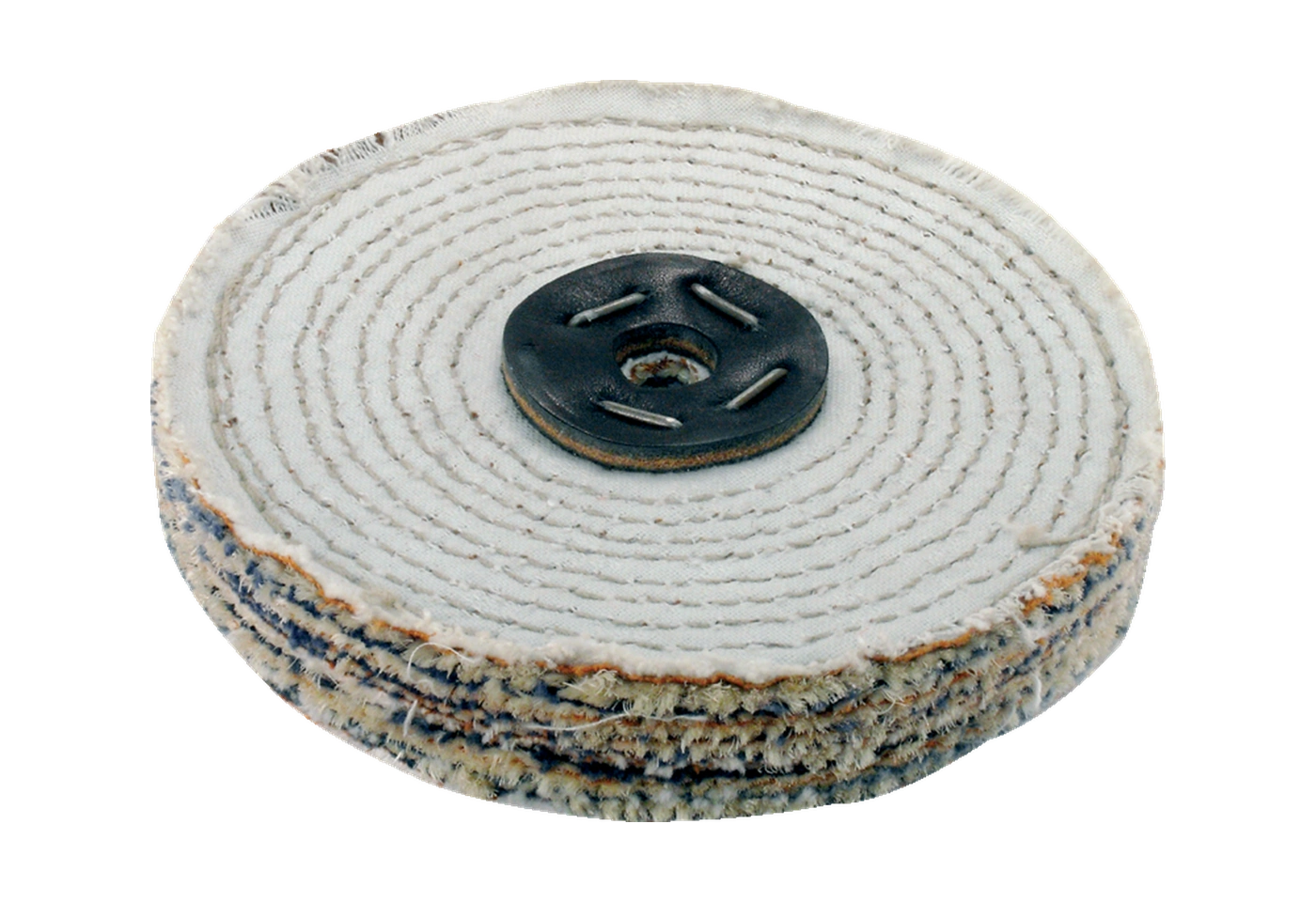
This workflow describes a specific LUXI Black branch. It does not prescribe sisal as a universal starting tool and does not replace the separate choice between a LUXI Black and LUXI Asian Blue strong first stage.
Entry condition
Complete item geometry, required repair, and even abrasive preparation before polishing. P400 is a minimum starting point for many LUXI Black tasks, while P600 or finer is preferred according to material, surface condition, item shape, and required result. On platinum, approximately P800–P1000 may be the normal starting point before LUXI Black.
Do not leave a deep scratch, crack, open cavity, unfinished shape correction, or another defect that polishing cannot remove without geometry loss. Sisal does not replace abrasive preparation or repair.
When to use sisal
Sisal provides the most aggressive LUXI Black action. Select this combination only on a hard or difficult metal when high removal is genuinely required and a less aggressive LUXI Black setup with the correct tool cannot perform the task after proper preparation.
Do not use sisal for finishing, on an already formed surface that needs only a finer compound, or to hide incomplete preparation. LUXI Black may be used on large flat and open bronze, brass, and silver surfaces, but this workflow does not prescribe sisal automatically for those materials. Select their working tool separately according to material, geometry, and permissible removal.
Distinguishing the working tools
A sisal wheel is a hard natural working body for maximum cut-down within the first stage. It leaves a more active trace and requires the strictest control of shape, edges, relief, and temperature.
A hard stitched cotton wheel provides a softer continuation of the LUXI Black first stage. Stitching retains structured contact, while cotton permits closer control of geometry and the surface left by the pass than sisal.
A treated stitched cotton wheel is firmer and more active than an ordinary stitched cotton wheel, but its use is controlled by the specific compound card. It is not an automatically approved LUXI Black continuation and must not replace the hard stitched cotton wheel without separate product-specific authority.
Every wheel must be clean and dedicated to its assigned compound. Use a separate clean wheel whenever the compound changes.
Operating conditions
For a standard wheel approximately 150 mm in diameter, 2500–3000 rpm is the working starting range. Do not transfer this range automatically to another diameter. For another wheel, consider linear surface speed, contact width and stability, rpm drop under load, temperature, and actual material behaviour.
Apply LUXI Black minimally to a clean wheel. Do not form a thick layer of compound and removed metal between the working body and the item. Work in short passes, keep the item moving, control pressure and temperature, and inspect the surface and geometry after every pass.
If the wheel becomes dark, greasy, clogged, or leaves a contaminated trace, stop contact and clean the wheel. Do not compensate for incomplete preparation or an overly soft tool with excess LUXI Black, increased pressure, or a prolonged continuous pass.
Transition from sisal to stitched cotton
Stop using sisal when the required aggressive-removal subtask is complete and further contact would add unnecessary removal or risk to the shape. The first visible lustre is not a readiness signal by itself.
Move the item fully away from the wheel, wash away LUXI Black and removed metal, allow the surface to cool, and inspect it under directed light. Check last-abrasive marks, the trace left by sisal, surface uniformity, flatness, edges, and relief.
When visible marks remain that LUXI Black can still remove safely, continue the same first stage with LUXI Black on a separate clean hard stitched cotton wheel. This is a working-body change within one first stage, not a mandatory compound change and not a wheel-comparison test.
When washing reveals a deep scratch, shape error, growing pore, crack, open cavity, or another defect outside polishing capability, return the item to abrasive preparation, repair, or production-suitability assessment.
First-stage completion criterion
The LUXI Black first stage is complete only when the fully washed, dry, and cool surface shows:
- no visible marks from the last abrasive;
- no unwanted coarse trace from sisal;
- an even surface;
- preserved shape, flat areas, edges, and relief;
- no sign of overheating or instability.
Do not move to a finishing compound until all these conditions are met.
Selecting the next product
On platinum, a completed LUXI Black first stage may move to finishing with LUXI Pink.
For stainless steel and Co–Cr, use the separate material workflow. A strong LUXI Black stage may be followed by a special LUXI Gray transition or an optional LUXI Yellow transition before LUXI Pink. These choices do not form one universal mandatory sequence.
For titanium and other hard or difficult metals, select the next finer compound according to material, the trace left by the completed first stage, and the required result. Use LUXI Gray, LUXI Yellow, LUXI Blue, or an appropriate finishing compound only in its supported material-specific role.
When correct preparation, a suitable tool, and correct operating conditions do not allow LUXI Black to complete the first stage, consider LUXI Asian Blue as a more active alternative through the separate strong-first-stage-choice workflow. LUXI Asian Blue is not a mandatory next stage after LUXI Black.
Washing and evaluation
Before evaluating the result and before every compound change, completely wash LUXI Black, removed metal, and wheel contamination from the item. Pay particular attention to relief, corners, recesses, and joints. Evaluate only a dry and cool surface under directed light.
A compatible washing solution may be used. LUXI iClean is recommended as the most compatible option because it is designed around LUXI compound chemistry, supports gentler washing conditions, and helps preserve surface stability after polishing. Other compatible washing solutions may also be used.
Ultrasonic washing, heated solution, and steam cleaning require whole-item eligibility, including the material, construction, stones, inserts, joints, and coating.
Stop conditions
Stop immediately if the process produces overheating, waviness, loss of flatness, edges, or relief, an unstable surface after cooling, damage to adjacent raised areas, opened or growing pores, cracks, or cavities, or a change in a coating.
These conditions require a return to preparation, repair, or suitability assessment, not more LUXI Black, higher pressure, or longer contact.
Related workflows
- Surface preparation before LUXI
- Wheel preparation and minimal LUXI compound application
- Strong first-stage choice: LUXI Asian Blue or LUXI Black
- Controlled LUXI routes for stainless steel and Co–Cr
- Independent LUXI polishing routes for platinum
- Developing a polishing route with limited wheels
- Process tuning with LUXI Sample Assortment
- Washing after LUXI polishing
Use the Limited Wheel Route when the required wheel is unavailable and a safe substitute must be established. Use LUXI Sample Assortment for separate process tuning and one-variable-at-a-time comparison. Neither workflow authorizes an arbitrary substitution of sisal, stitched cotton, or compound.