
 Integrated Polishing System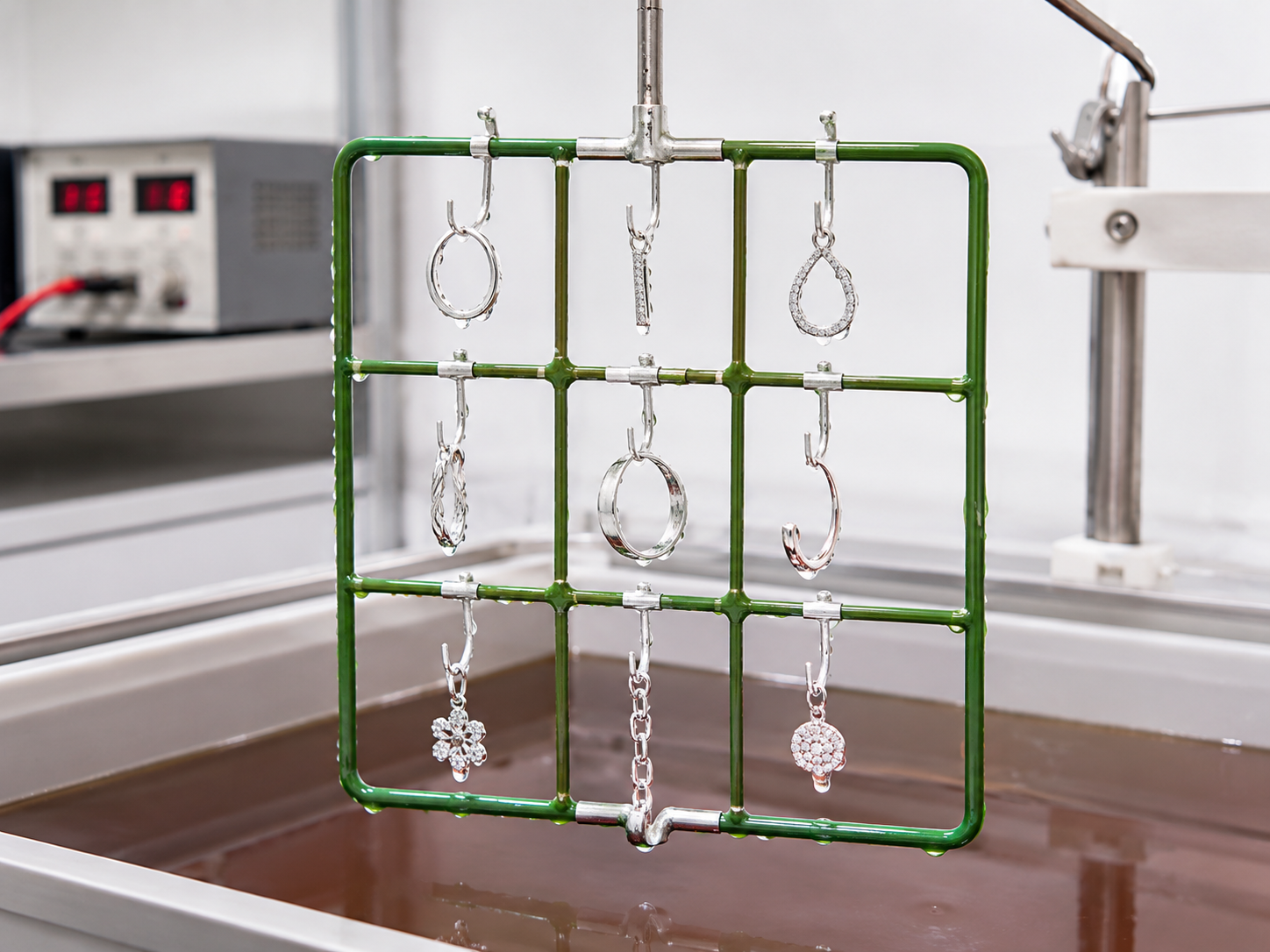
Coating does not correct the surface of the item. It repeats what is already present on the metal, and can sometimes make scratches, waves, preparation marks, porosity and contamination even more visible.
Before coating is applied, the item must pass through all technological stages in the correct sequence.
Sanding must remove shape defects and activate the surface. The first polishing stage must remove scratches from abrasive preparation and form a smooth metal surface layer. The finishing stage must smooth and stabilize the formed surface, reduce the number of micro-defects and prepare it for washing and coating.
Only after that should washing remove compound residues, removed metal and contamination without damaging the obtained surface layer.
When this workflow is needed
Use this workflow if a decorative, protective or electroplated coating will be applied to the item after polishing.
Typical cases:
- preparing gold and silver items before rhodium plating, gilding or another coating;
- ensuring a stable result where the coating lies evenly and holds reliably, without peeling;
- surface preparation after the first LUXI polishing stage;
- quality control after final polishing;
- inspecting the item after ultrasonic washing before it is sent for coating.
Main logic
For coating, not only the visual lustre matters, but also the condition of the surface layer.
If the surface is poorly formed, contaminated with compound, contains micro-defects or cannot withstand washing, the coating receives a weak base. It can lie unevenly, lose appearance faster or have a higher probability of peeling.
Correct preparation is built on four stages:
- sanding removes shape defects and activates the surface;
- the first polishing stage removes scratches from abrasive preparation and forms a smooth metal surface layer;
- final polishing smooths and stabilizes the formed surface;
- washing removes compound residues, removed metal and contamination without damaging the obtained surface layer.
What must be done before coating
1. Surface preparation
Deep scratches, coarse sanding marks, waves, porosity and geometry errors must be corrected before finishing. If these defects remain, coating will not hide them.
2. First polishing stage
The first polishing stage forms the surface. At this stage, scratches from abrasive preparation are removed and an even, predictable base for finishing is obtained.
If the item has not yet been formed, do not try to solve this with finishing compound or coating. Return to the first polishing stage or to surface preparation.
3. Final polishing
Final polishing is needed not only for lustre. It additionally smooths the formed surface, reduces the number of micro-defects and helps obtain a continuous smooth surface layer.
For gold, especially when electroplated coating will be applied after polishing, the preferred setup is:
LUXI Orange + clean unstitched finishing wheel
For silver, finish stability before washing is especially important. Silver is sensitive to aggressive ultrasonic washing, so the surface must be well prepared and washed carefully.
4. Washing after polishing
Before coating, no compound, removed metal, greasy film or wheel contamination should remain on the item.
If iClean is used, follow short washing time, correct concentration and moderate temperature. Do not compensate for difficult washing by excessive time, temperature or ultrasonic aggressiveness.
Learn more: “Washing after LUXI polishing” and iClean.
Special caution with silver
Silver can be especially sensitive to aggressive ultrasonic washing. Excessive washing time, excessive temperature or an overly active mode can damage the surface and cause a milky surface.
If silver becomes milky, cloudy or loses clean lustre after washing, the item should not be sent for coating immediately. First identify the cause: insufficient finish stabilization, overly aggressive washing, contaminated wheel, compound residues or errors in previous preparation.
In such cases, additional polishing and more careful washing may be required.
How to inspect the item before coating
After washing, inspect the item under good light.
The surface must be:
- clean;
- even;
- free of compound residues;
- free of cloudy zones;
- free of deep scratches;
- free of coarse preparation marks;
- free of waves and geometry distortions;
- free of areas where the lustre deteriorated after washing.
It is important to inspect the item after washing, not only immediately after final polishing. The shine that appears bright immediately after the finishing stage can be partially damaged by cavitation during aggressive ultrasonic washing, especially if the surface was not sufficiently stabilized during the finishing stage.
When not to proceed to coating
Do not send the item for coating if:
- the surface became cloudy after washing;
- a milky surface appeared on silver;
- scratches or preparation marks are visible;
- the area to be coated is contaminated with compound;
- the lustre holds only before washing;
- waves, pits, pores or geometry damage are present;
- final polishing was used as a substitute for the first polishing stage.
In these cases, return to the required stage: surface preparation, first polishing stage, finishing or washing.
Next step
If the surface is not yet ready for coating, start with “Surface preparation before LUXI.”
If the surface is prepared but not yet formed, use “Basic LUXI production route for first-group materials.”
If the item needs final lustre before coating, use “Final lustre for gold” or “Final lustre for silver.”
If residues must be removed after polishing, use “Washing after LUXI polishing.”
Related pages:
- Surface preparation before LUXI
- Basic LUXI production route for first-group materials
- Final lustre for gold
- Final lustre for silver
- Washing after LUXI polishing
- Wheel preparation and minimal LUXI compound application
- LUXI Orange
- LUXI Super Fine White
- How the finishing stage differs from the first polishing stage