
 Integrated Polishing System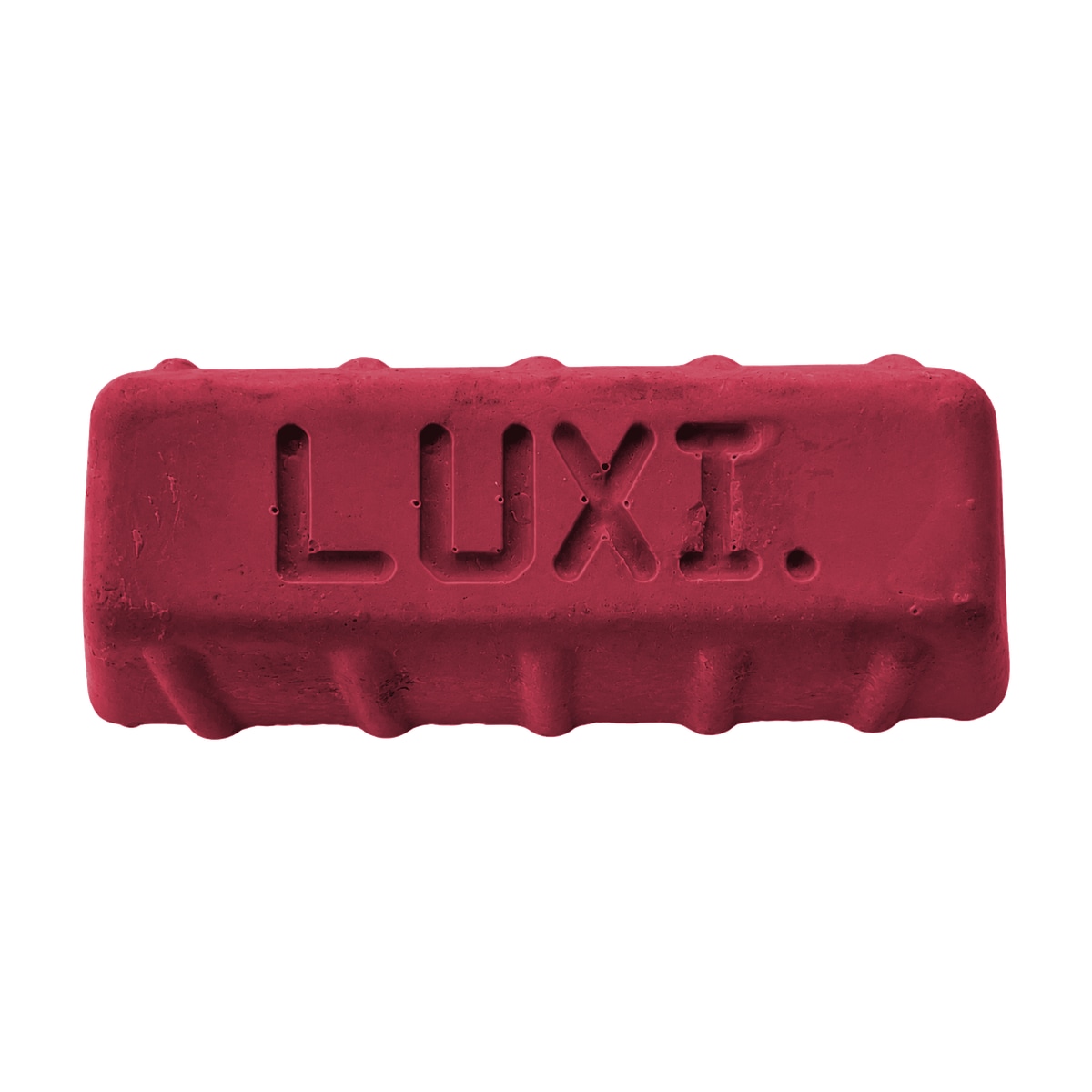
Application context
Use LUXI Red only after the item’s geometry, necessary repair, abrasive preparation, and the appropriate first polishing stage have been completed. All visible marks from the last abrasive must have been fully removed, the surface must be even and ready for finishing, and residue from the first-stage compound and removed metal must be removed before changing to a separate clean finishing tool.
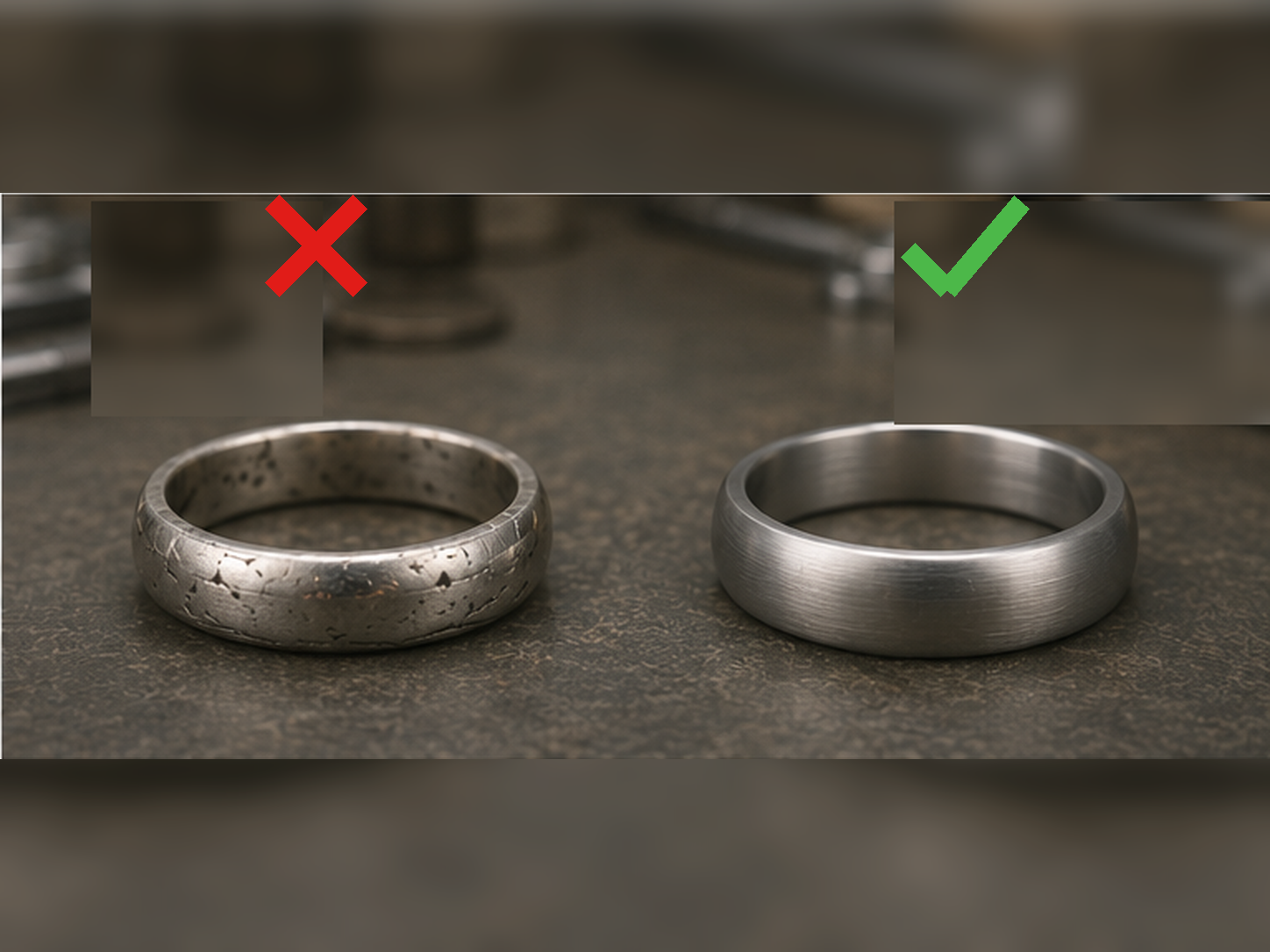
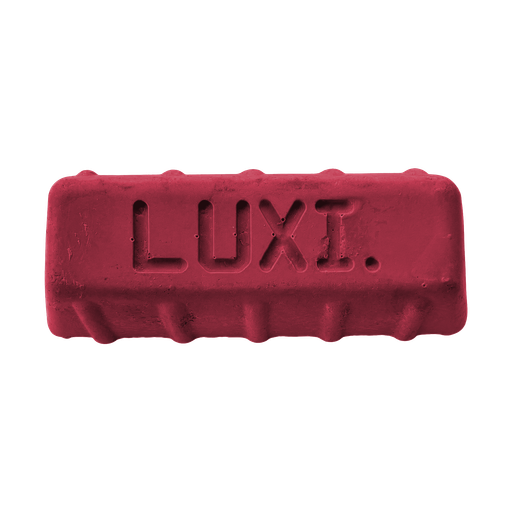
LUXI Red performs finishing with minimal removal. It further smooths the already formed near-surface layer and brings it to an even final lustre and a uniform reflection, but it must not reform the geometry or perform the work of a first-stage compound. LUXI Red is not intended to correct deep scratches, cracks, open cavities, large pores, unfinished shape, pronounced dullness, lines from the previous abrasive, or signs of an incomplete first stage. No universal abrasive-preparation grade is specified for every alloy approved for LUXI Red.
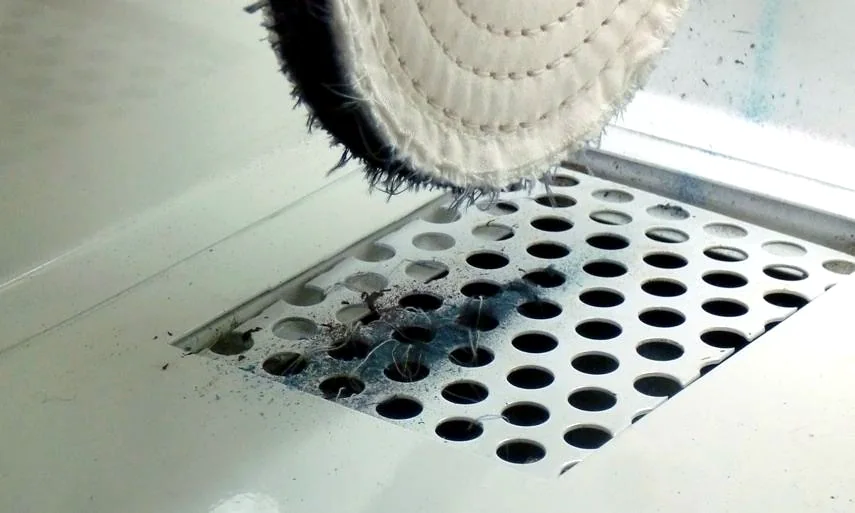
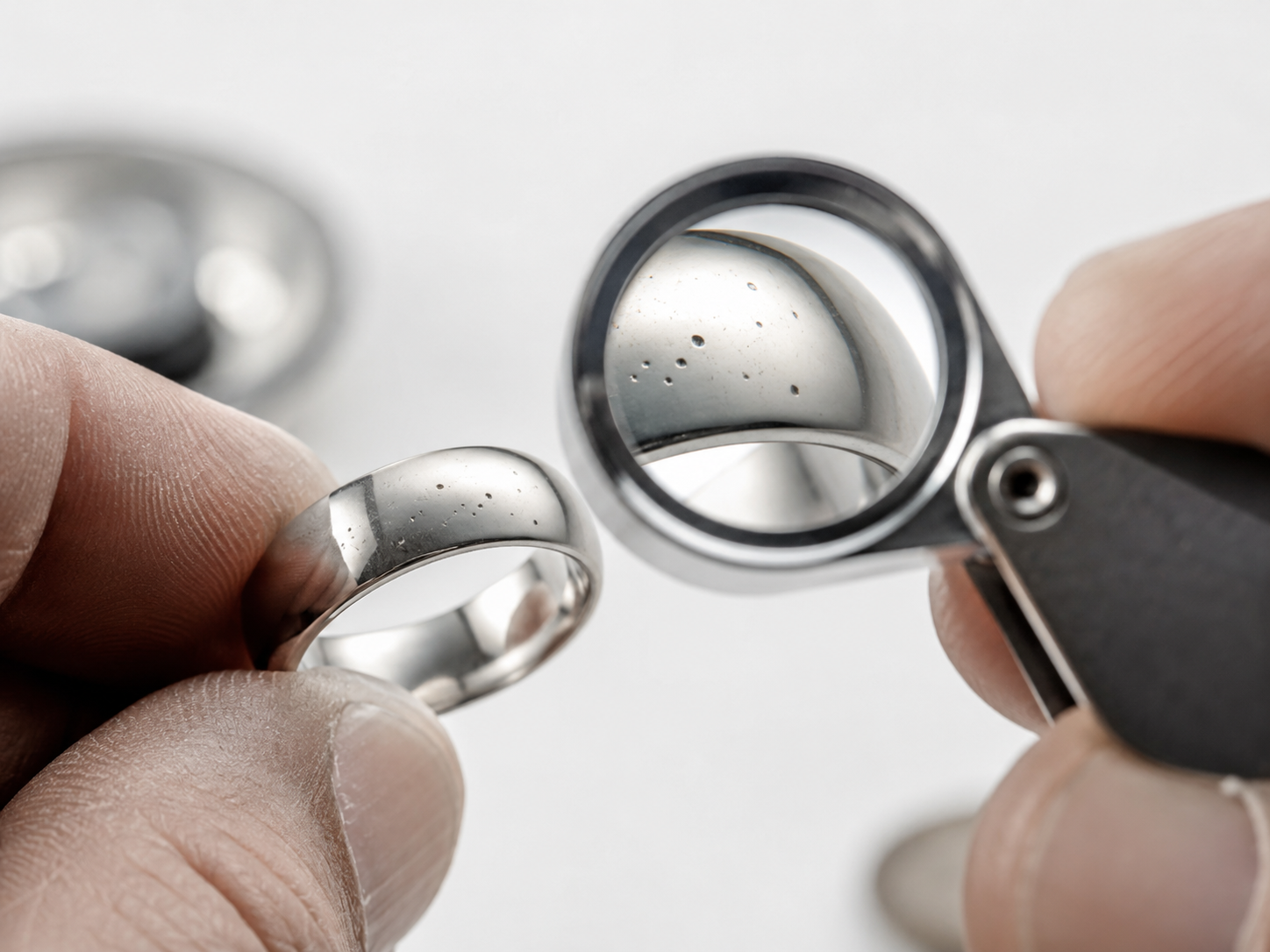
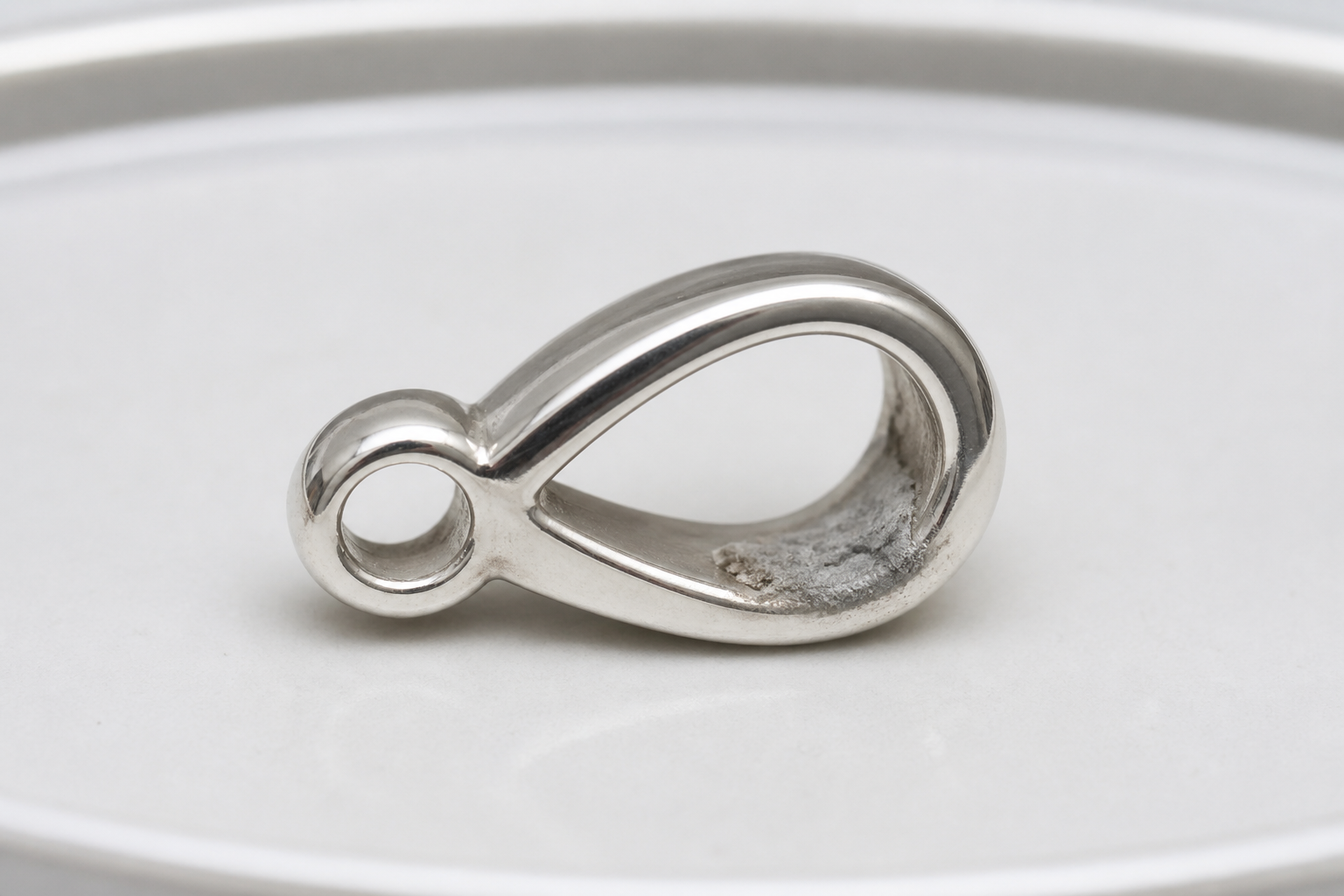
During polishing with LUXI Red, a black trace may become visible in micropores, small recesses, or irregularities. Against a polished surface, it identifies an area that must be cleaned and inspected more closely. The black trace alone does not prove the presence of a pore or another defect: it may be residue from LUXI Red, wheel contamination, removed metal, a micropore, a recess, an irregularity, or an indication of insufficient preparation or an incomplete first stage.
Do not conceal the black trace with additional LUXI Red, accept it as the finished result, or leave it before final inspection or coating. Remove the residue completely and inspect the area again. If the trace disappears, it may have been compound residue or contamination. If a visible pore, depression, irregularity, crack, or another defect remains after cleaning, return the decision to preparation, repair, or assessment of whether the item is suitable to continue in production.
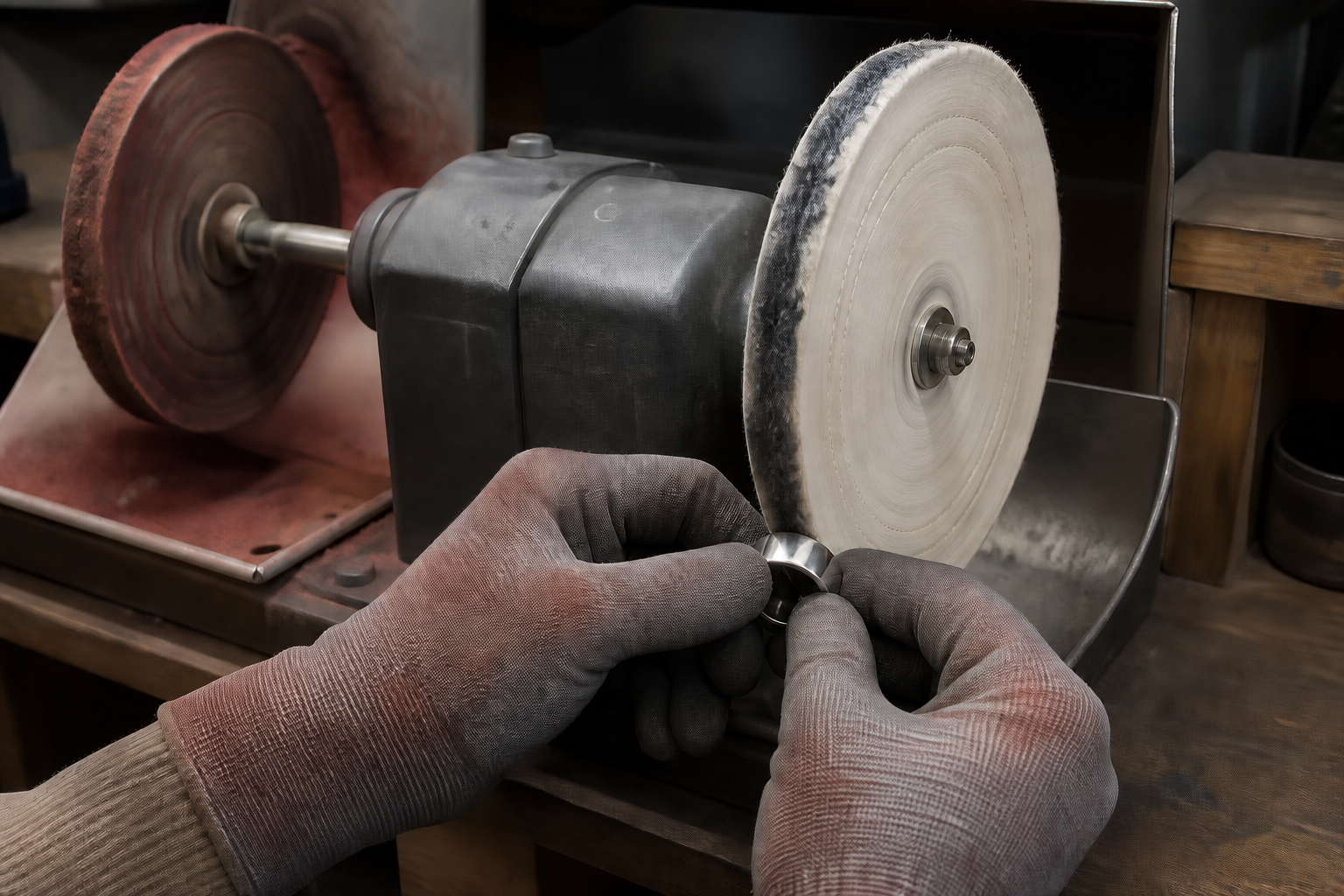
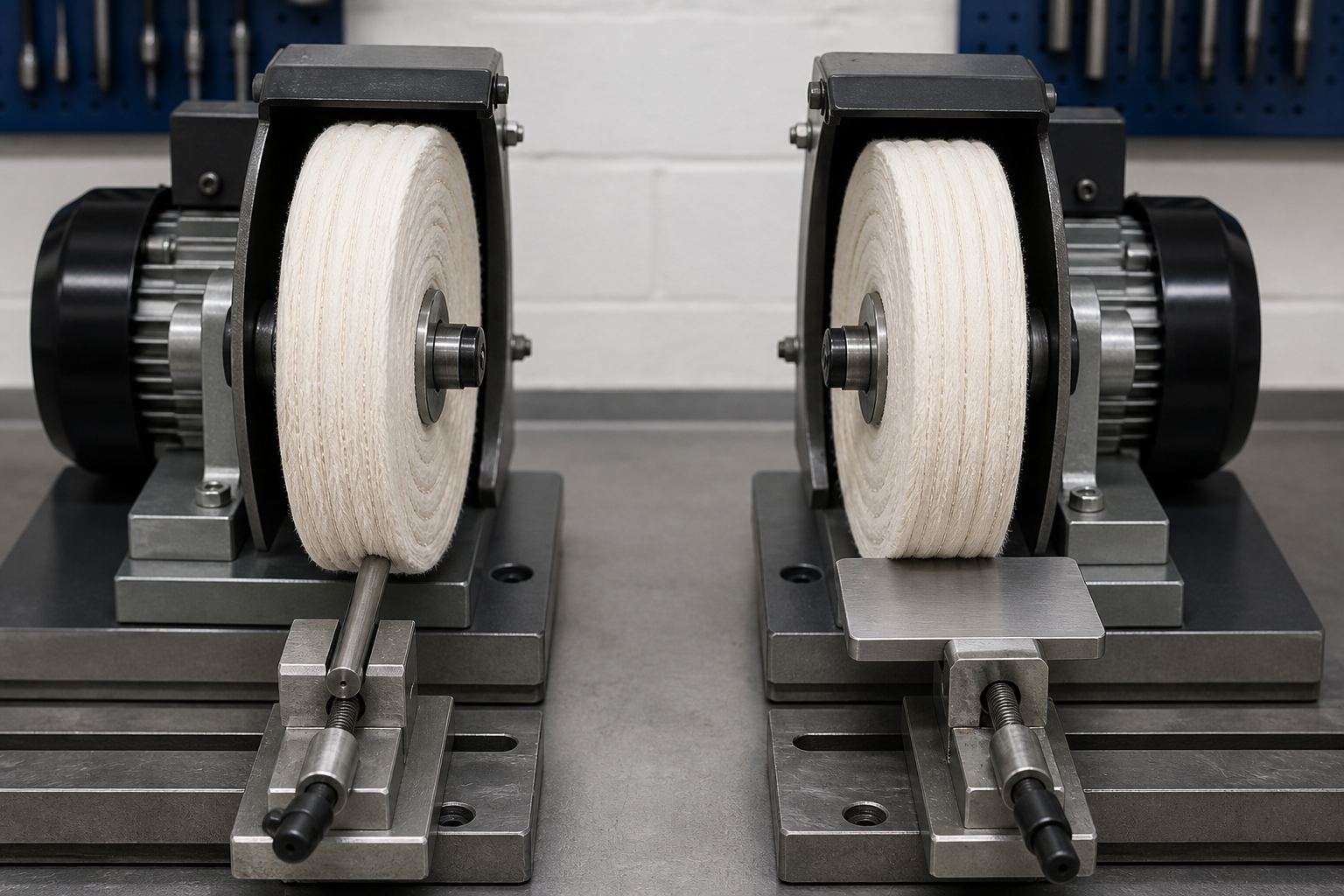
The main working tools are a separate clean soft unstitched cotton wheel and a separate clean unstitched Luxol wheel. Do not use felt tools with LUXI Red. Do not use the wheel from the first-stage compound, LUXI Super Fine White, LUXI Orange, or another product for LUXI Red. The exact fabric family of the Luxol wheel has not been established in the confirmed data and must not be replaced silently with muslin, flannel, Calico, or another fabric name.
For a wheel approximately 150 mm in diameter, the working starting range is 2500–3000 rpm. Do not transfer this range automatically to another wheel diameter. Select the operating conditions for another diameter according to linear surface speed, actual contact area, wheel stability, surface temperature, and the behaviour of the particular alloy. No universal pressure, continuous-contact duration, or numerical temperature limit is established for LUXI Red.
Apply LUXI Red minimally to a clean separate wheel. Work in short passes, keep the item moving relative to the wheel, and inspect the surface between passes. Select pressure for the material and geometry: it must maintain stable contact without noticeable overheating, edge loss, relief smoothing, or distortion of shape. Pause for cooling when required.
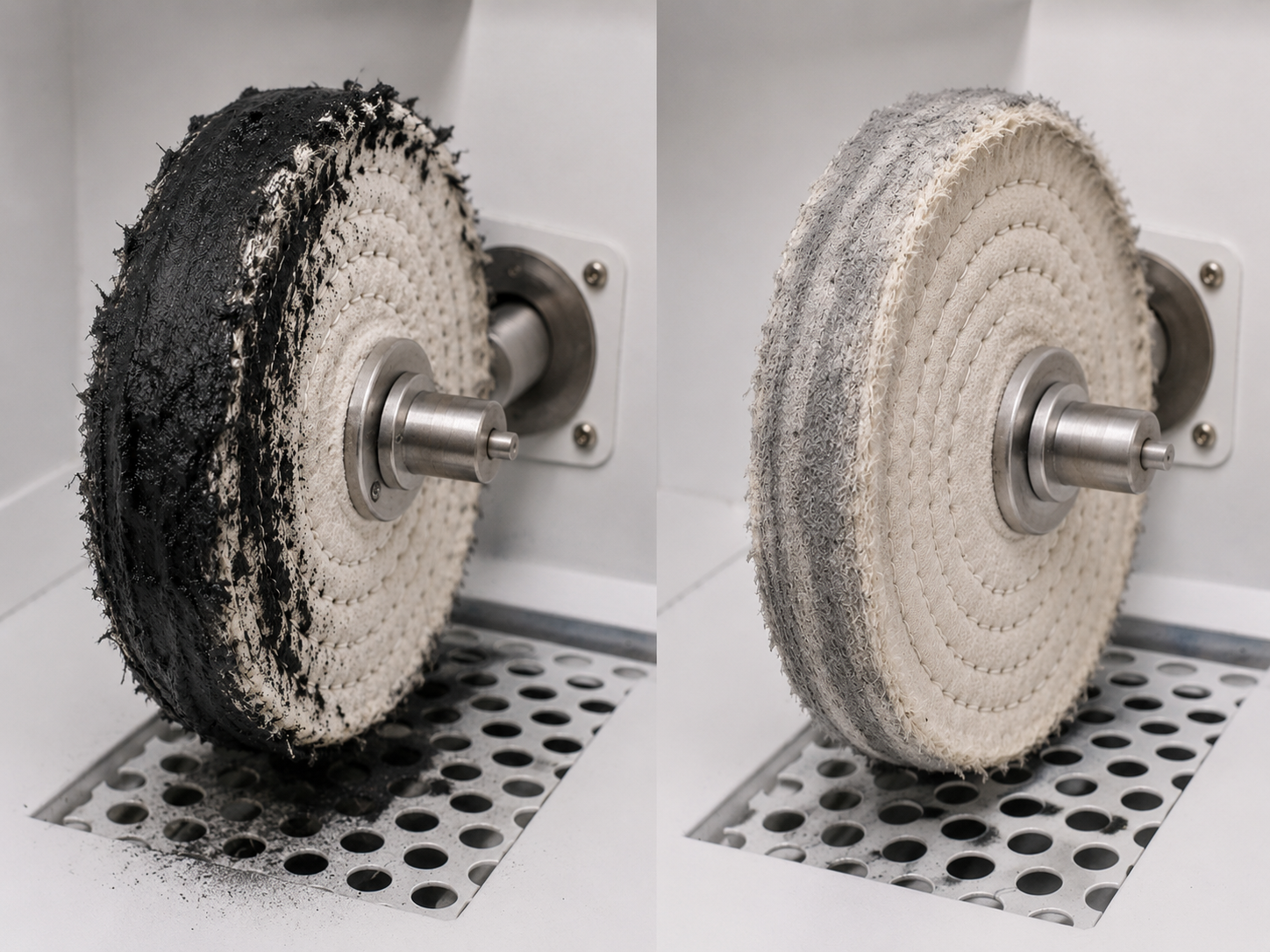
If the wheel becomes dark, greasy, sticky, clogged with removed metal, old compound, or residue from another product, clean it before continuing. Excess LUXI Red creates an intermediate layer of compound, removed metal, and contamination between the wheel and the surface. This weakens direct contact, may cloud the surface, makes black-trace inspection less reliable, packs residue into pores and recesses, and makes later cleaning more difficult. Do not compensate for insufficient action with more LUXI Red, stronger pressure, or prolonged continuous contact.
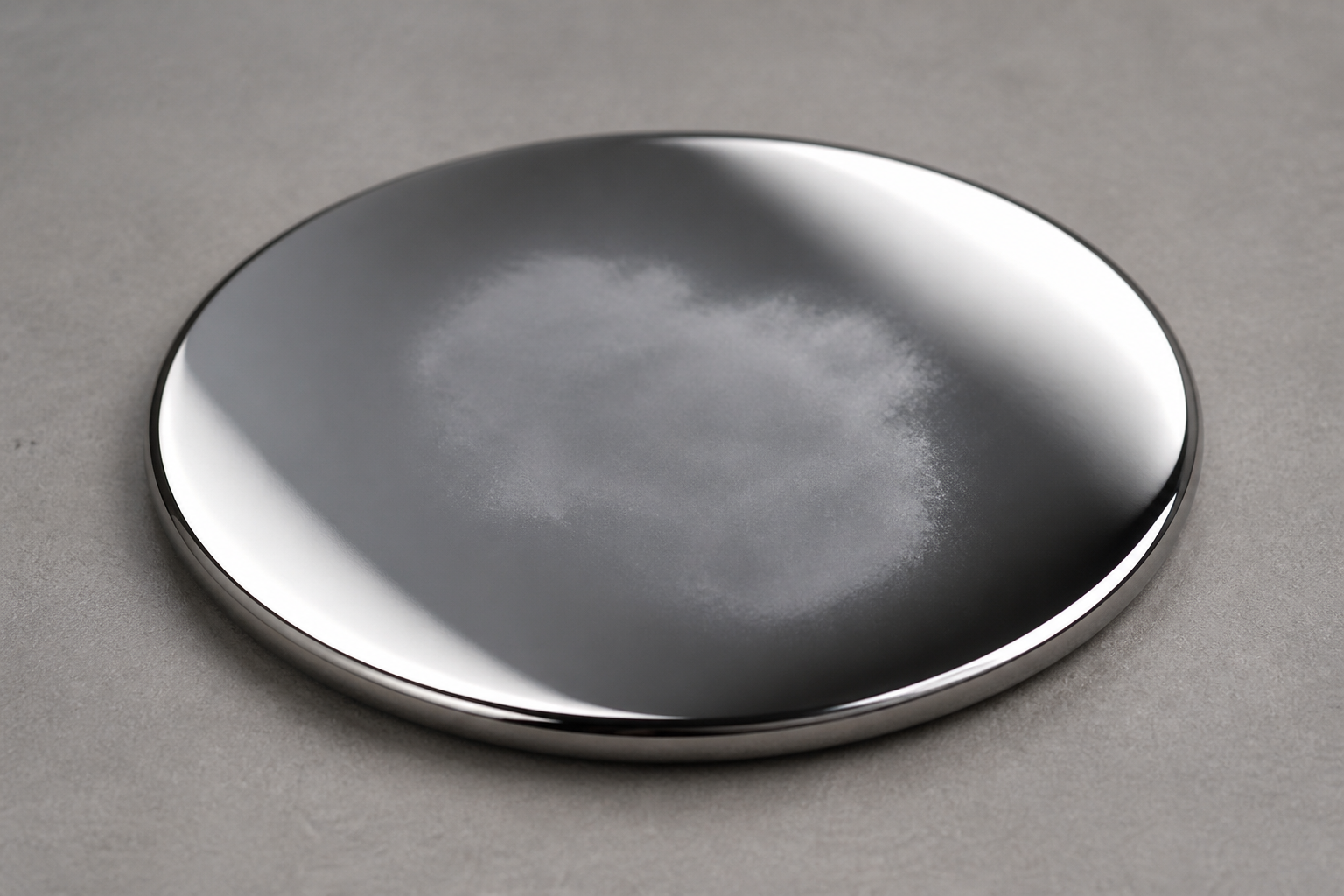
Polishing with LUXI Red is complete when, after complete removal of compound and removed metal, cooling, and drying, the surface has an even final lustre and a uniform reflection, dull areas and marks from the previous stage are absent, and edges, relief, and intended geometry remain intact. All black compound residue, removed metal, and contamination must be removed, and the result must remain stable under directed light. Lustre on a contaminated surface is not a sufficient completion criterion.
If LUXI Red does not produce an even result or a black trace remains, check the following in sequence: completion of geometry and repair; abrasive preparation; completion of the first stage; visible marks from the last abrasive; selection of the previous compound; suitability of the working wheel; use of a clean soft unstitched cotton wheel or clean unstitched Luxol wheel; wheel cleanliness; amount of LUXI Red; rpm; wheel diameter; linear surface speed; contact area; pressure; pass duration; temperature; residue in recesses; completeness of cleaning; surface condition after cooling; and whether a real micropore, irregularity, or another defect remains.
Stop work if edges are lost, relief is smoothed, geometry is distorted, cloudiness increases, overheating becomes noticeable, or the lustre becomes unstable after cleaning and cooling. Stop also if a visible pore, depression, irregularity, crack, or another defect remains after cleaning; if pores, cracks, or cavities open or enlarge during continued work; if the problem reappears after cleaning; or if there is risk to a coating, stones, inserts, settings, joints, or the construction of the item. LUXI Red must not be used to conceal such defects.
LUXI Red and LUXI Super Fine White are alternative finishing choices for copper alloys including brass and bronze, silver alloys, and most gold alloys. Choose LUXI Red when black-trace inspection helps identify micropores and small irregularities for closer examination. Choose LUXI Super Fine White as the separate standard finishing option for a high, even lustre. LUXI Red and LUXI Super Fine White are not mandatory consecutive stages.
LUXI Orange is an independent finishing option for an exceptionally high, even lustre, stricter final inspection, or preparation before electroplating, PVD, and other operations sensitive to compound residue. LUXI Orange is not a mandatory stage after LUXI Red, a universally superior finish, or a replacement for LUXI Super Fine White.
LUXI Red may be a completed finish before electroplating or PVD when the particular production process permits it and black-trace inspection is useful to the operator. Before coating, remove all LUXI Red, black traces, removed metal, and wheel contamination, especially from micropores, recesses, areas beneath settings, inside corners, relief, spaces between elements, and areas around stones and inserts. Perform the final inspection after cleaning, drying, and cooling under directed light.
Preparing open metal for a future coating does not authorize polishing an existing coating with LUXI Red. Do not mechanically polish a thin decorative, protective, electroplated, or PVD layer if it must be preserved. Identify an unknown coating first. A sufficiently thick and stable layer may be assessed only for general suitability for mechanical polishing after a test; a successful general assessment does not itself create a positive LUXI Red recommendation.
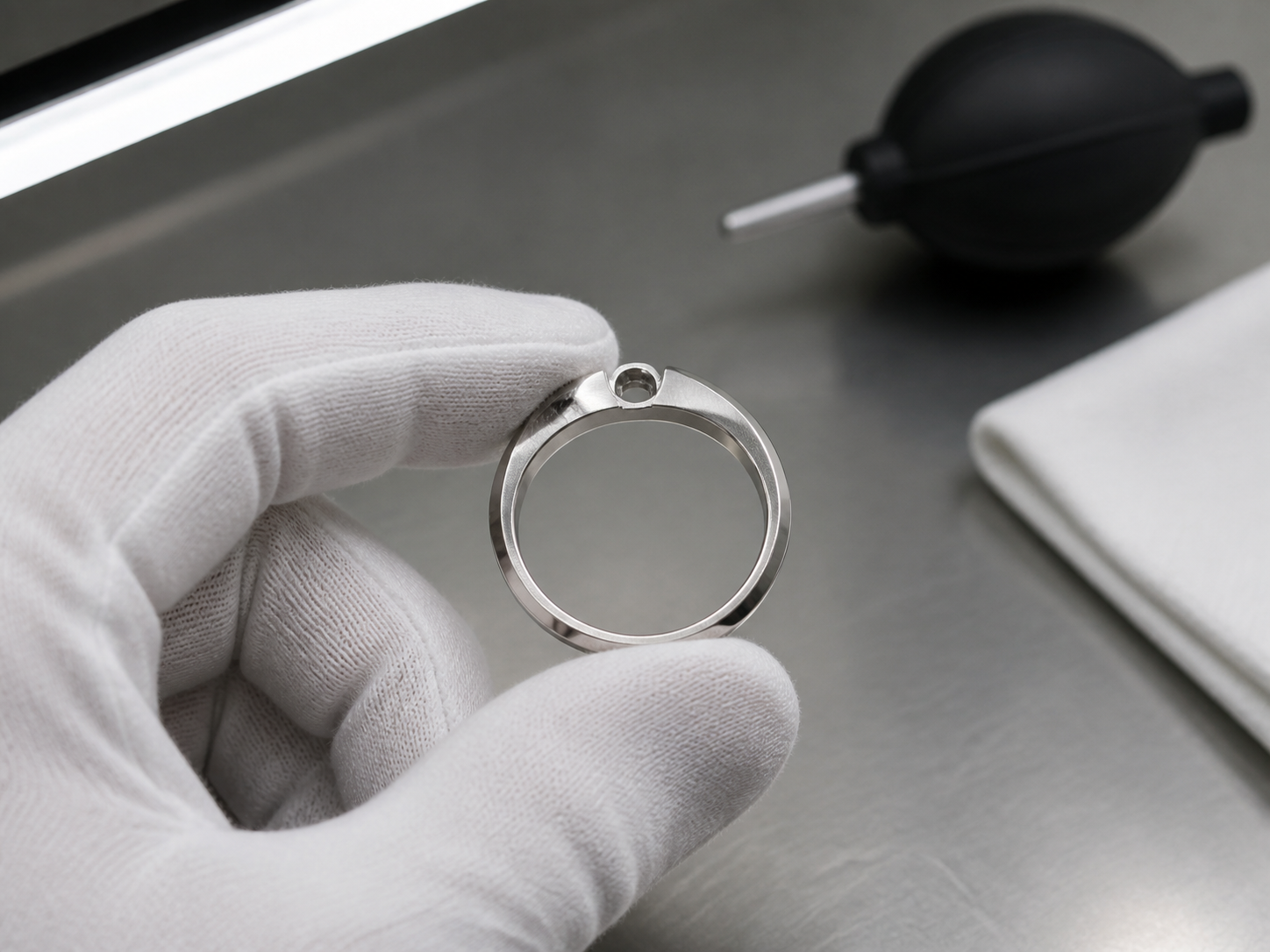
After LUXI Red, remove compound and removed material completely, allow the item to cool, dry the surface, and inspect it under directed light. Check flat areas, edges, relief, recesses, micropores, inside corners, settings, joints, and areas around stones and inserts. LUXI iClean, ultrasonic cleaning, heated solution, solvent, and steam are not prescribed automatically: select the cleaning method for the material, construction, existing coating, stones, inserts, and next operation. Use a separate clean tool for another compound.