
 Integrated Polishing System
Why the Beilby Layer Matters in Polishing
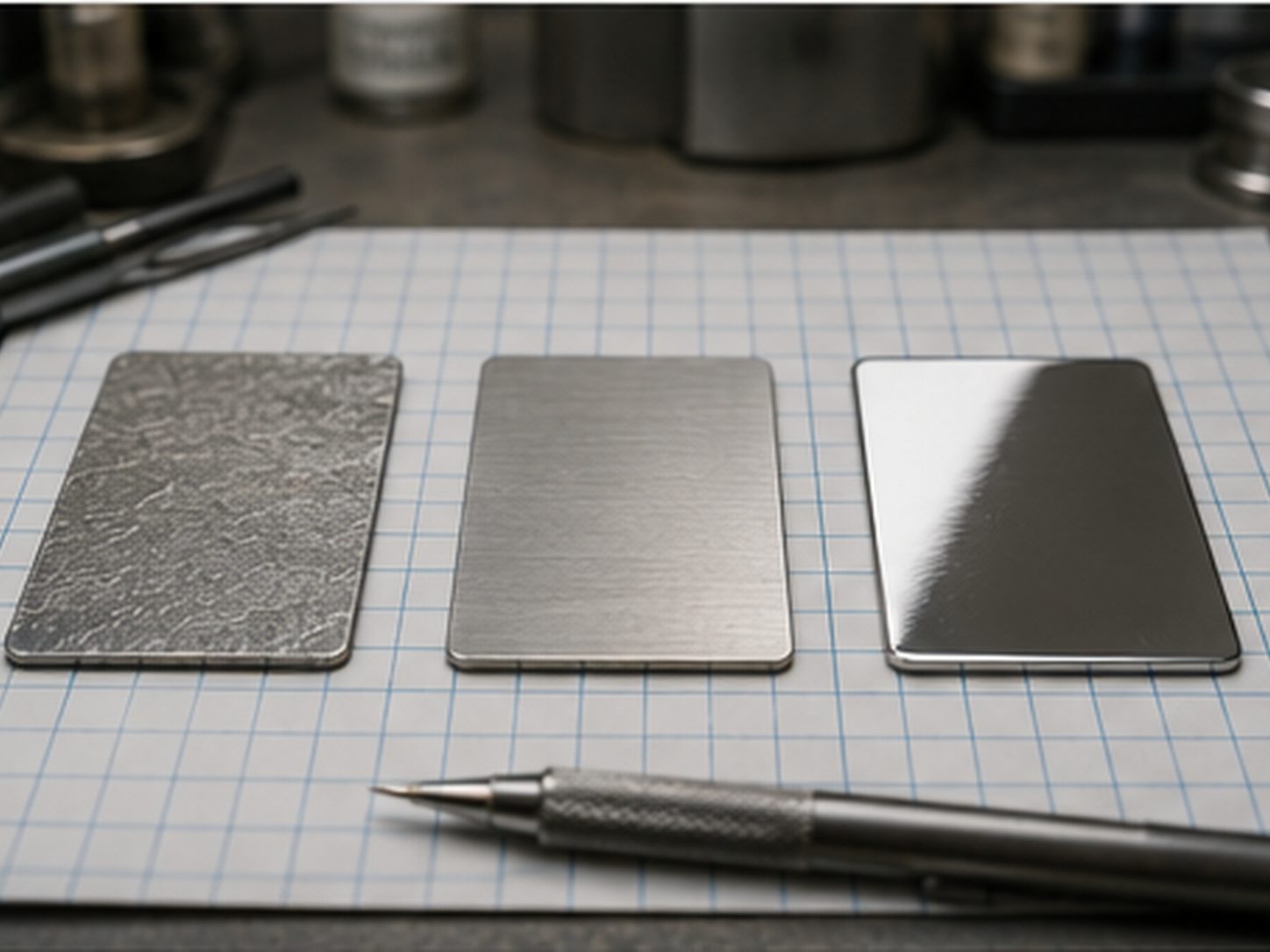
In the common understanding, polishing is often seen as a process in which abrasives make scratches progressively finer until the surface begins to shine. This is only partly correct. In jewellery polishing, not only metal removal but also the behaviour of the surface layer itself plays an important role.
The concept of the Beilby layer helps explain why polishing can do more than simply “erase” irregularities: it can displace, redistribute and compact the upper layer of the metal. With the right combination of compound, wheel, pressure, temperature and contact time, the surface layer begins to behave differently from the bulk metal beneath it.
For LUXI, this is a key idea: the purpose of the system is not only to remove traces of abrasive preparation, but also to create a controlled surface layer that closes micro-irregularities and produces a stable lustre.
Abrasive Removal and Surface Displacement
During the early stages of preparation, the surface is covered with marks from grinding and abrasive preparation. The depth of these marks is related to the abrasive size and the cleanliness of the preceding tool. As long as the surface remains dominated by coarse scratches, it is too early to speak of a true final lustre.
First-stage LUXI compounds do not act only as fine abrasives. Their particles create numerous localised interactions at protruding micro-irregularities. The surface layer becomes more structurally disturbed and is more readily displaced and redistributed under the action of the wheel.
As a result, some microvoids and small irregularities are closed not only through metal removal, but also through displacement of the surface layer. This is the practical connection between LUXI and the logic of the Beilby layer.
Why Not Every Defect Can Be Concealed
The Beilby layer helps close and smooth small irregularities, but it is not a means of repairing every type of defect. If a pore, crack, shrinkage cavity or deep scratch is too large, the surface layer will not be sufficient to close it without distorting the geometry or compromising quality.
Defects must therefore be evaluated before a piece enters the LUXI process. If a defect is too deep, the piece must be repaired, returned to an earlier processing stage or rejected. Attempting to “polish away” everything leads to loss of form, softened detail and an unstable result.
Diagnostic Polishing
After abrasive preparation, the surface often appears as a continuous field of fine scratches. Against this background, it is difficult to determine which defects remain and which marks are merely traces of the final grinding stage.
A diagnostic polish is therefore useful: a brief pass with a finishing compound, such as LUXI Super Fine White. It removes the visual noise created by fine scratches and reveals the actual surface defects.
If deep pores, cracks or major defects remain visible after this check, they must be addressed before the main polishing workflow begins.
Temperature, Pressure and the Risk of Instability
The formation and displacement of the surface layer depend on temperature, pressure and contact time. When the process is controlled, the layer is redistributed in a way that supports lustre and smoothing. If the process is too hot, too long or too aggressive, the surface may become unstable.
On some materials, particularly titanium and other difficult alloys, overheating may produce a friable surface or an “orange-peel” effect. This can be regarded as uncontrolled displacement or breakdown of the surface layer.
This is why LUXI places so much emphasis on linear speed, wheel diameter, contact area, pressure, wheel stiffness and compound selection.
Why Different Compounds Behave Differently
Different LUXI compounds affect the surface layer in different ways. Blue, Yellow, Gray and Black provide different levels of first-stage action and removal. Green may work more controllably at lower temperatures and may behave differently depending on the wheel. Pink is used to produce a final mirror lustre on second-group materials after correct preparation. Beige is used on polymers, where the logic of the Beilby layer does not apply directly, although temperature control remains critical.
The system cannot be reduced to a “coarser” or “finer” compound. What matters is how the compound interacts with the material, the wheel and the temperature in the contact zone.
Connection with Practical LUXI Workflows
The logic of the Beilby layer helps explain why different materials require different workflows.
For first-group materials, a first polishing stage followed by finishing is usually sufficient. Large planar surfaces require a more active first stage because the pressure per unit area is lower. For titanium and platinum, control of temperature and surface stability is important. Stainless steel and Co-Cr require aggressive preparation, but the finishing stage must still remain controlled. For polymers, a different logic applies: the main risk is not the Beilby layer, but overheating and smearing of the material.
LUXI is therefore structured as a system of workflows, rather than as a universal compound for every situation.