
 Integrated Polishing System
Modern jewellery production has changed. More pieces are now produced by direct casting from wax or resin 3D prototypes, from metal powders, by powder metallurgy, or through complex digital forming processes. These methods give designers more freedom: deep relief, thin walls, complex chains, fine detail and hard-to-reach areas.
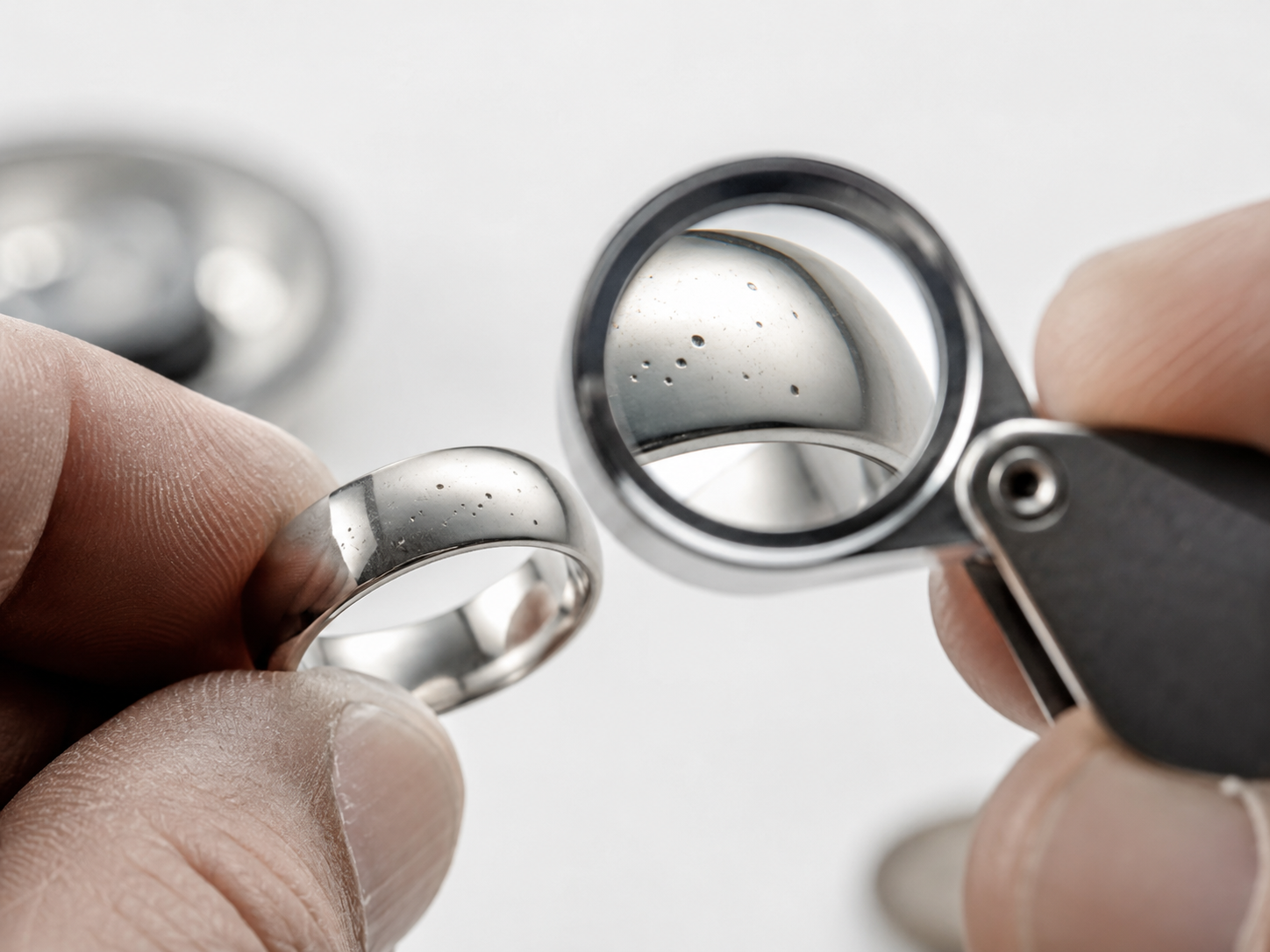
But they can also create hidden problems inside the metal: microporosity, weakened structural zones, shrinkage microporosity, hidden casting defects, defects extending into the piece and non-uniform material density.
At early stages these defects may not be visible. Grinding and polishing gradually open new surface levels, and subsurface defects may become exposed.
Traditional polishing often follows a simple logic: remove metal until the defect disappears. If the defect is shallow, this can work. But if the defect extends into the volume of the piece, that logic begins to damage the result. More metal is removed, geometry is lost, relief details become rounded, and new defects continue to open.
At a certain point, the problem is no longer the polisher’s skill or the equipment. The problem is the principle of surface treatment itself.