
 Integrated Polishing System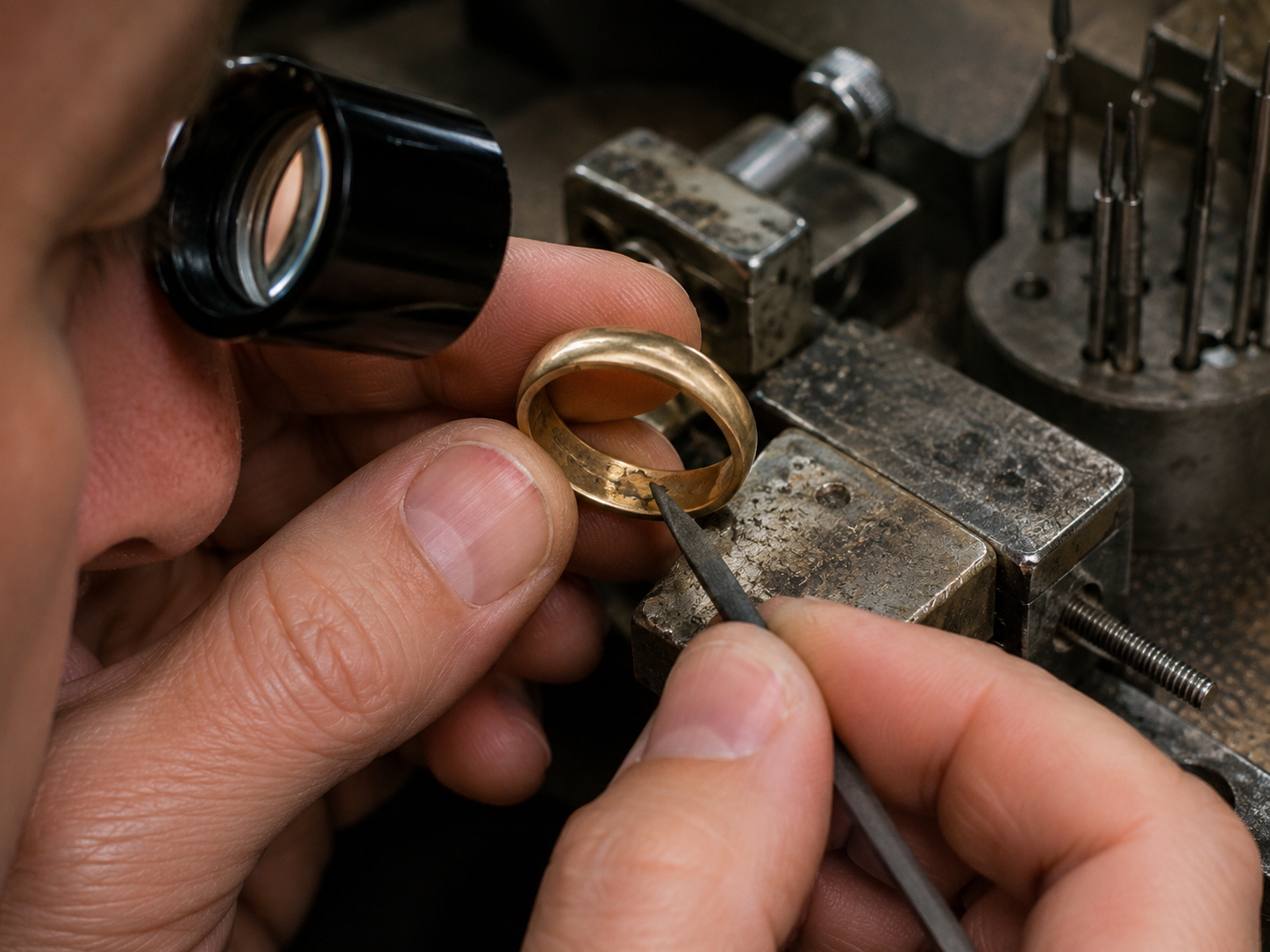
If a customer understands the risks and still asks you to restore a coated item, do not begin with polishing.
Your first task is to identify the coating system.
Only after you understand how the surface has been built can you decide whether restoration is technically realistic, whether the finish should be replaced completely, or whether the safest professional decision is to decline the work.
The purpose of this workflow is not to teach universal coating repair. It helps you determine which restoration path, if any, is technically appropriate.
When to use this workflow
Use this workflow when:
- the item already has an unknown or damaged coating;
- the customer requests restoration rather than a simple assessment;
- the customer understands that diagnostic testing may permanently change the coating;
- you need to decide whether restoration is technically possible and, if so, which approach is appropriate.
If you have not yet decided whether the item should even be accepted for repair, begin with Second-hand Coated Item Risk Assessment.
That workflow helps determine whether the workshop should accept the job and what can realistically be promised to the customer.
Before any diagnostic work
Explain to the customer that:
- the coating system is still unknown;
- a diagnostic test in a hidden area will permanently remove coating at that location;
- the original appearance may prove impossible to reproduce;
- additional layers or previous repairs may be discovered beneath the surface;
- the workshop may ultimately recommend declining the restoration if the coating system cannot be identified with sufficient confidence.
Customer approval allows a diagnostic examination.
It does not guarantee that restoration will be possible.
Perform a diagnostic test
Choose a hidden, non-critical area of the item.
Using a fine abrasive rubber tool or another carefully controlled fine abrasive, remove only a very small amount of the coating.
Work slowly.
Use magnification and good directional lighting.
Observe carefully:
- how the colour changes;
- whether another metal appears beneath the decorative layer;
- how many different layers become visible;
- whether the outer layer is metallic or non-metallic;
- which base metal is finally exposed.
The purpose of this operation is not to begin restoration.
Its only purpose is to identify the coating system.
Option 1 — Direct electroplated coating without an underlayer
If the decorative coating is removed and gold or silver appears immediately beneath it, with no intermediate layer of another colour, the decorative coating may have been applied directly to the base metal.
Examples include:
- gold plating;
- rhodium plating;
- platinum plating;
- other direct electroplated metallic finishes.
Such coatings can often be replaced.
However, local touch-up is rarely the correct solution.
There is no assurance that the original coating and the new coating will match in:
- chemistry;
- structure;
- thickness;
- colour;
- brightness;
- adhesion.
Local repair may leave a visible transition.
Recommended procedure
- Completely remove the existing coating.
- Perform all necessary repairs.
- Restore the geometry of the item.
- Follow Surface Preparation Before LUXI.
- Complete the standard Two-stage LUXI Polishing Workflow for Group 1 Materials.
- Clean the item using Cleaning After LUXI Polishing.
- Prepare the surface according to Preparation Before Electroplating.
- Apply a completely new electroplated finish.
Before proceeding, confirm that the alloy, solders, settings and overall construction of the item are compatible with the intended plating process.
Option 2 — Metallic coating with one or more underlayers
If additional metallic layers become visible beneath the decorative finish, you are dealing with a multilayer coating system.
Typical signs include:
- a copper-coloured layer;
- a white metallic layer;
- several colour changes during gradual removal;
- multiple distinct metallic interfaces.
These intermediate layers may exist to:
- improve adhesion;
- isolate reactive alloys;
- prevent metal migration;
- control colour;
- reduce corrosion;
- prepare difficult alloys for decorative plating.
In this situation it is usually not enough to polish the item and apply a new decorative coating.
If your workshop cannot confidently identify and reproduce the complete coating system, the safest professional decision is to decline the work.
Applying a new coating onto an unknown multilayer system may result in:
- peeling;
- staining;
- colour changes;
- underlying layers becoming visible;
- poor adhesion;
- unstable appearance after only a few days.
An attractive appearance immediately after delivery does not prove that the coating system is stable.
Declining the work in this situation is often the most technically responsible decision.
Option 3 — Non-metallic coating
If the item has an unusually bright colour that is not typical of the metal itself, the outer layer may be:
- electrophoretic coating (e-coat);
- cataphoretic lacquer;
- coloured protective lacquer;
- another non-metallic coating system.
Typical colours include:
- blue;
- green;
- pink;
- other decorative colours that disappear completely once the coating is removed.
The original finish usually cannot be reproduced in a normal jewellery workshop.
Recreating it may require:
- specialised equipment;
- dedicated coating materials;
- controlled process chemistry;
- curing equipment;
- production-scale coating technology designed specifically for that finish.
Even workshops equipped for such processes rarely prepare a complete coloured coating system for a single repair.
A practical alternative
Instead of attempting to reproduce the original coating, the customer may choose a completely new finishing system.
The recommended procedure is:
- Remove the existing non-metallic coating completely.
- Inspect the exposed metal and any intermediate layers.
- Perform the necessary repairs.
- Follow Surface Preparation Before LUXI.
- Complete the standard Two-stage LUXI Polishing Workflow for Group 1 Materials.
- Clean the item using Cleaning After LUXI Polishing.
- Prepare the surface according to Preparation Before Electroplating.
- Apply a new metallic finish such as gold plating or rhodium plating.
The customer should clearly understand that this is not restoration of the original finish.
The original colour will be lost.
The item will receive an entirely new finishing system.
If additional unknown metallic layers are discovered after removing the lacquer, return to Option 2 and reconsider whether the work should proceed.
Stop the process if
Stop the restoration and reconsider the job if:
- the layer sequence cannot be identified;
- the base metal remains uncertain;
- multiple unexplained layers are discovered;
- previous repairs complicate the structure;
- the exposed alloy appears chemically unstable;
- the construction is incompatible with the required process;
- your workshop cannot reproduce the complete coating system;
- the customer cannot accept changes to the original appearance;
- a stable long-term result cannot be reasonably predicted.
Where LUXI fits into this workflow
LUXI is not used to identify coating systems.
It does not restore unknown coatings.
The LUXI process begins only after:
- the previous coating has been completely removed;
- repairs have been completed;
- the base metal has been identified;
- the restoration strategy has been chosen;
- the surface has been properly prepared.
Continue with the standard Two-stage LUXI Polishing Workflow for Group 1 Materials.
The first stage develops the prepared metal surface.
The second stage produces the final polishing quality before cleaning and plating.
Do not move directly to LUXI Super Fine White or LUXI Orange while the surface still contains:
- scratches;
- preparation marks;
- waviness;
- cracks;
- porosity;
- raised repair defects;
- geometry errors.
Return first to Surface Preparation Before LUXI.
Related LUXI products
The correct compound depends on:
- the exposed base metal;
- the geometry of the item;
- the quality of the prepared surface.
Typical Group 1 workflows may include:
- LUXI Blue;
- the appropriate first-stage compound for heavier preparation where required;
- LUXI Super Fine White;
- LUXI Orange;
- LUXI iClean.
These products are intended for properly prepared exposed metal.
They are not methods for repairing unknown coating systems.
Next step
If the item has not yet been accepted, return to Second-hand Coated Item Risk Assessment.
If the coating has already been removed, continue with:
- Surface Preparation Before LUXI
- Two-stage LUXI Polishing Workflow for Group 1 Materials
- Cleaning After LUXI Polishing
- Preparation Before Electroplating
Key principle
Do not begin polishing an unknown coating.
Do not promise restoration before the coating system has been identified.
If the coating system cannot be confidently understood and reproduced, declining the work remains the most technically responsible decision.
This workflow applies only to the original LUXI Integrated Polishing System.
It should not be interpreted as general advice for all polishing compounds or all coating systems.