 Integrated Polishing System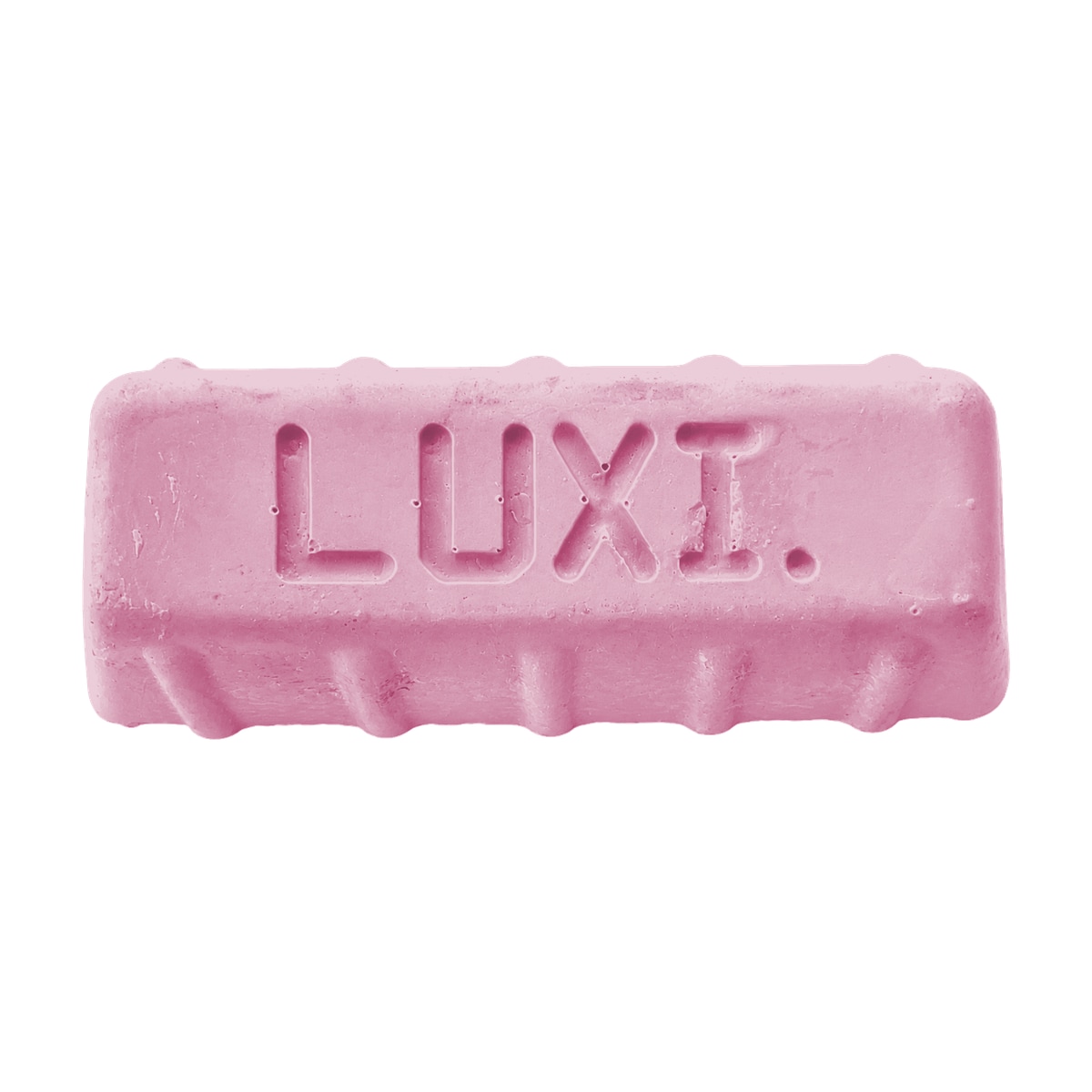
Application context
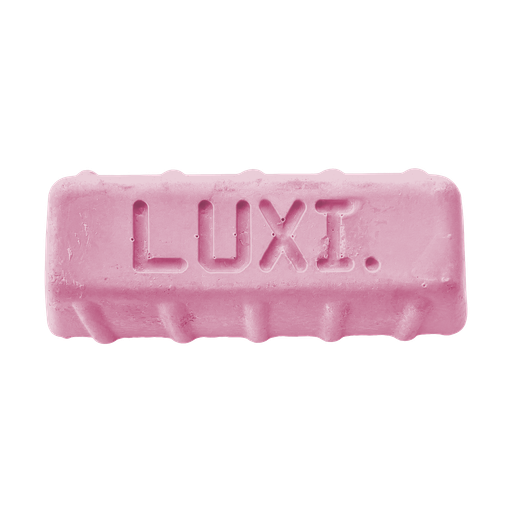
Before using LUXI Pink, complete the item’s geometry, necessary repair, abrasive preparation, and the appropriate first polishing stage. All visible marks from the last abrasive must have been fully removed, the surface must be even and ready for finishing, and first-stage compound residue must be removed. LUXI Pink must not correct deep scratches, cracks, open cavities, unfinished shape, pronounced dullness, lines from the previous abrasive, or signs of an incomplete first stage.
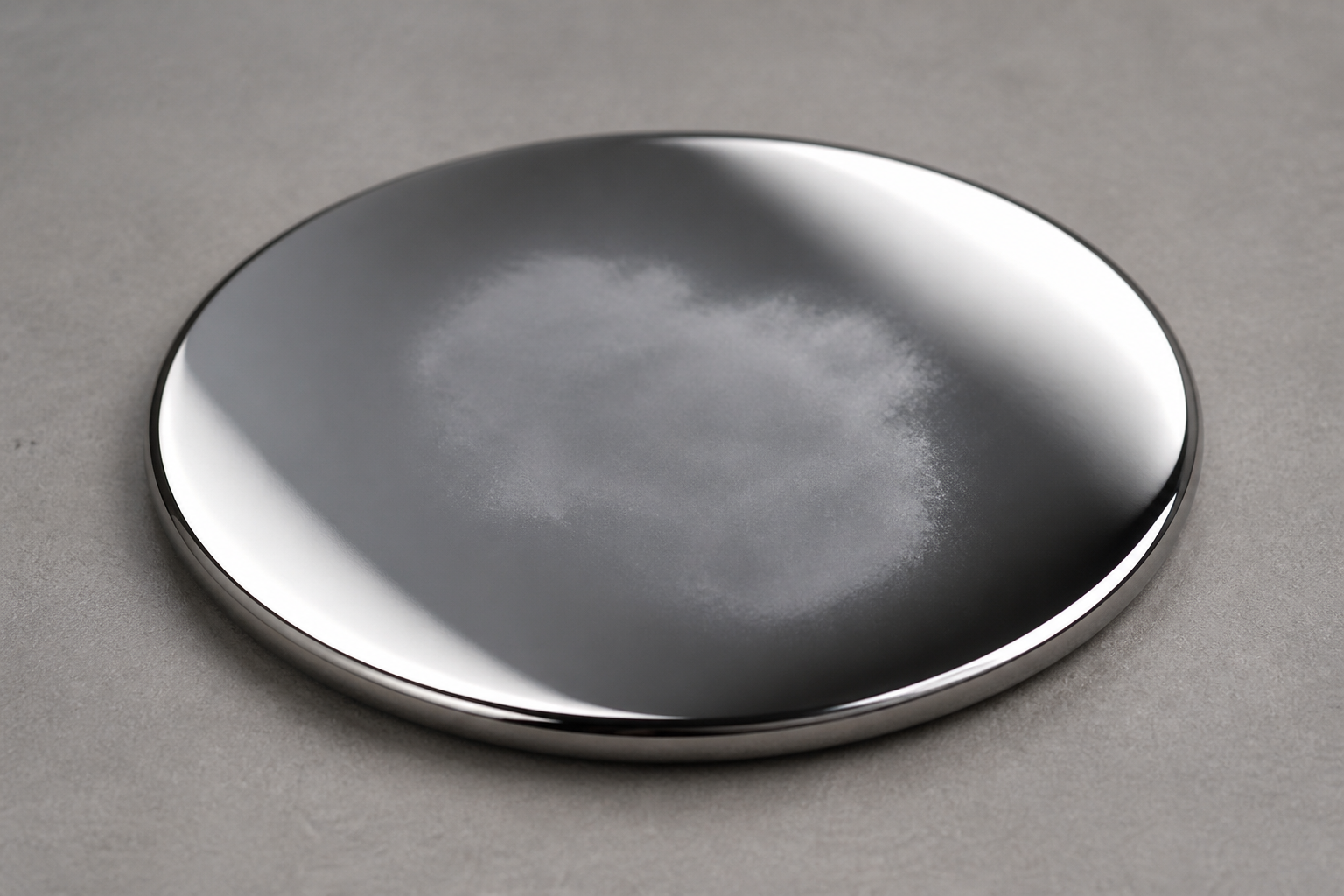
LUXI Pink performs finishing with minimal removal. It further smooths the already formed near-surface layer and brings the surface to an even mirror reflection, but it must not reform geometry or perform the work of a more active compound.
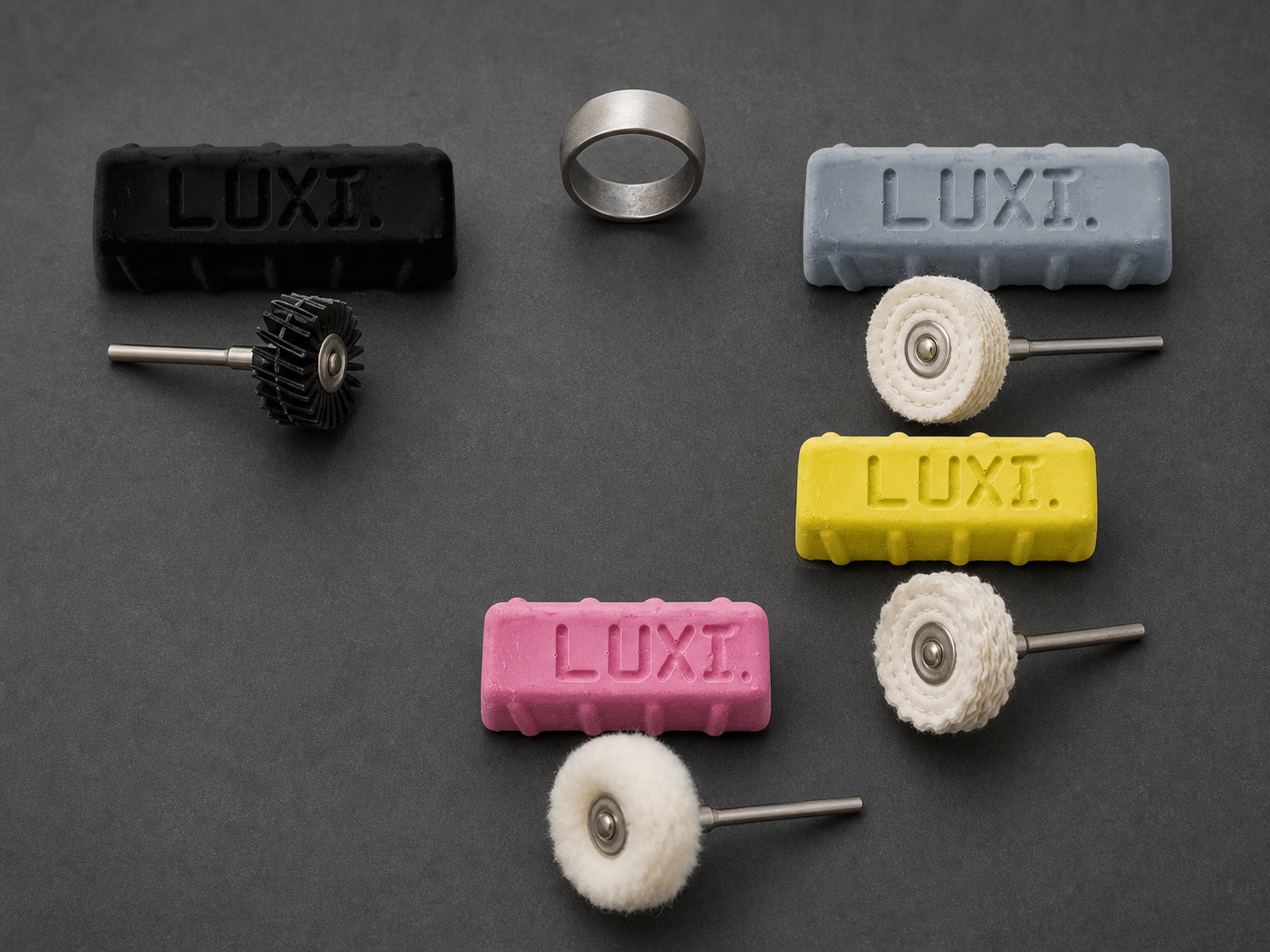
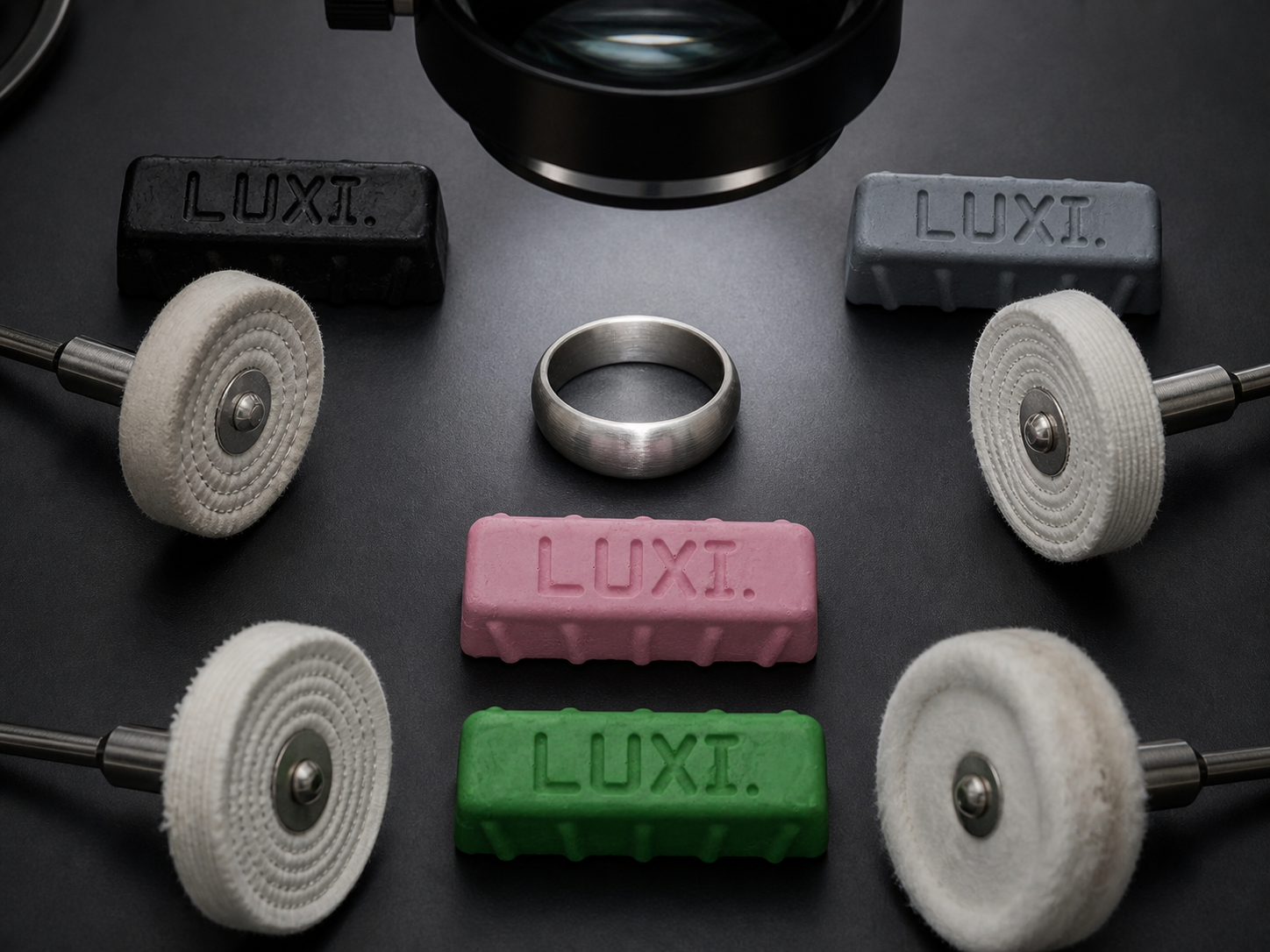
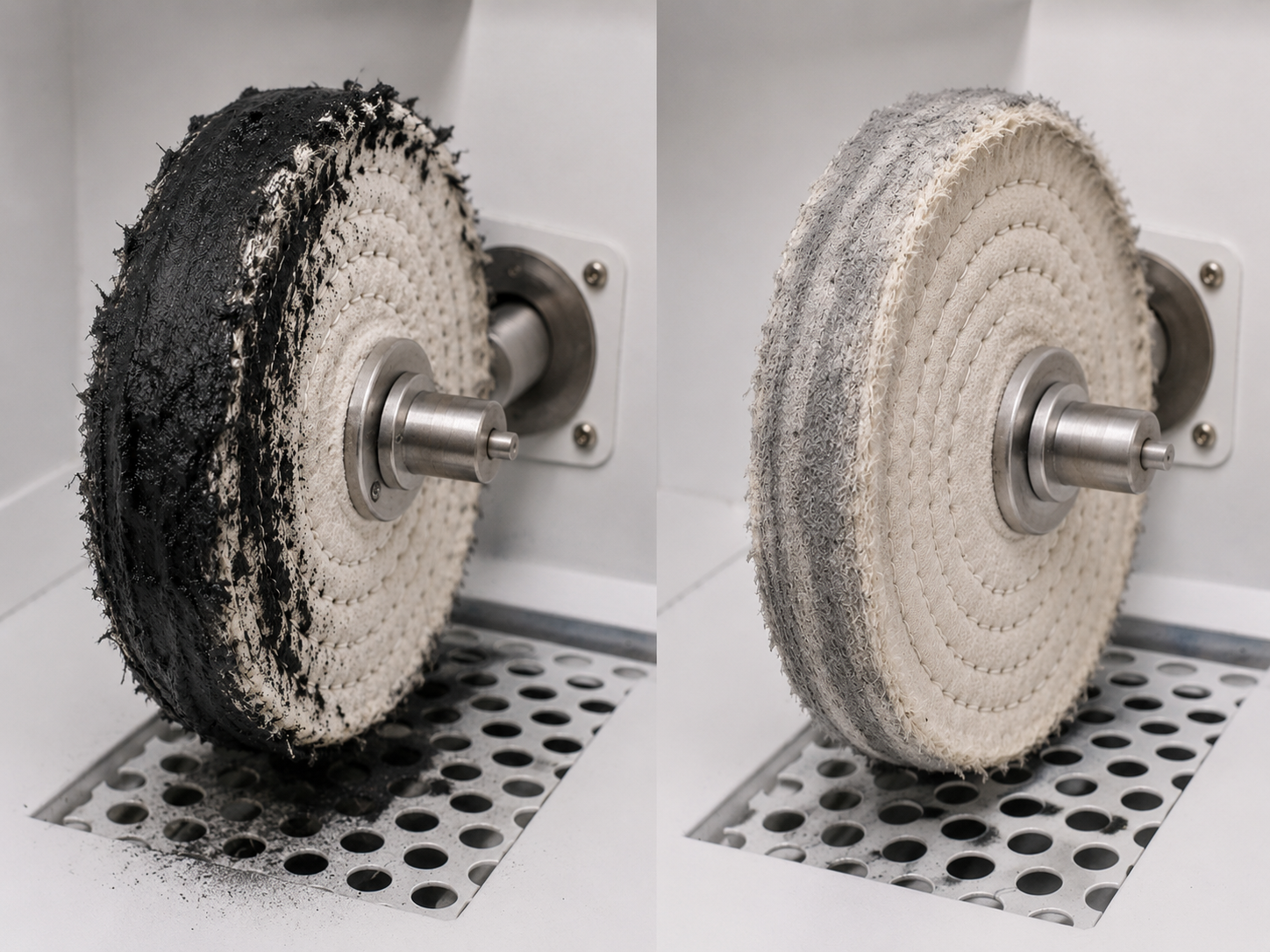
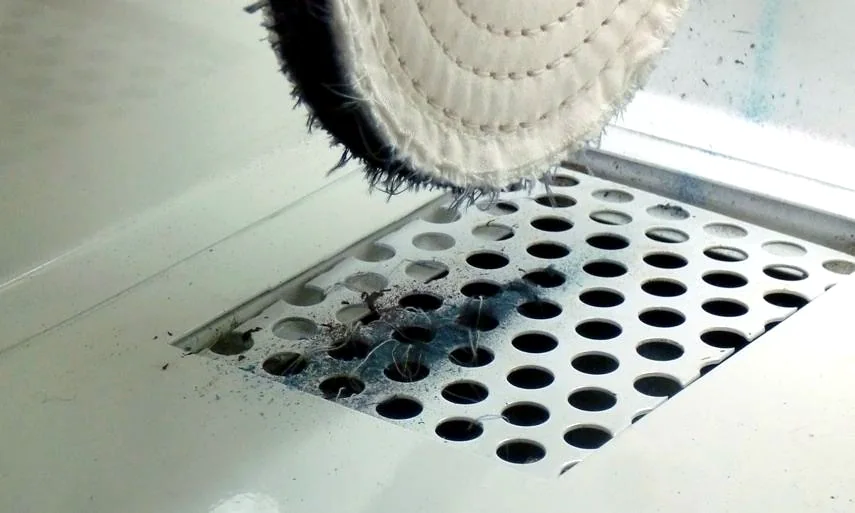
The primary working tool is a separate clean white unstitched Calico wheel. The unstitched construction provides soft contact and the Calico fabric provides a stable working surface for finishing. Muslin, flannel, felt, and stitched cotton wheels are not the primary working bodies for LUXI Pink. Do not use a wheel previously used with a first-stage compound or another finishing compound: coarser residue changes the finishing result.
For a wheel approximately 150 mm in diameter, the working starting range is 2500–3000 rpm. Do not transfer this range automatically to another diameter; consider linear surface speed, contact area, wheel stability, temperature, and actual material behaviour. Apply LUXI Pink minimally to a clean wheel. Work in short passes, keep the item moving relative to the wheel, inspect the surface between passes, and control pressure and temperature. Pause for cooling when required. Excess LUXI Pink creates an intermediate layer between wheel and surface, weakens direct contact, and may produce cloudiness instead of a clean mirror reflection.
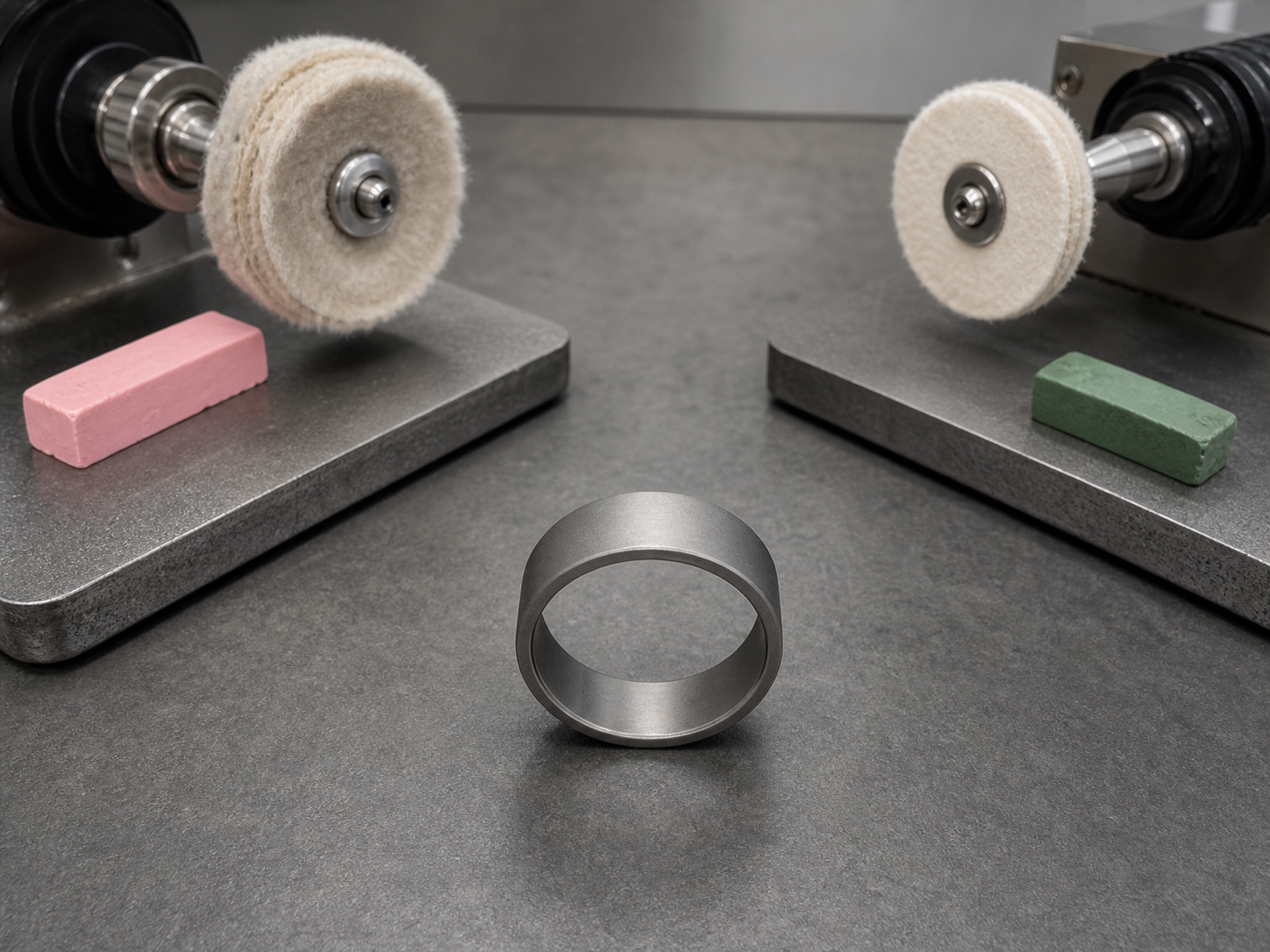
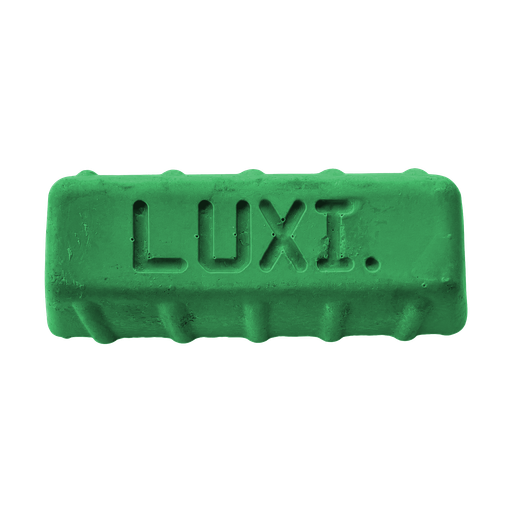
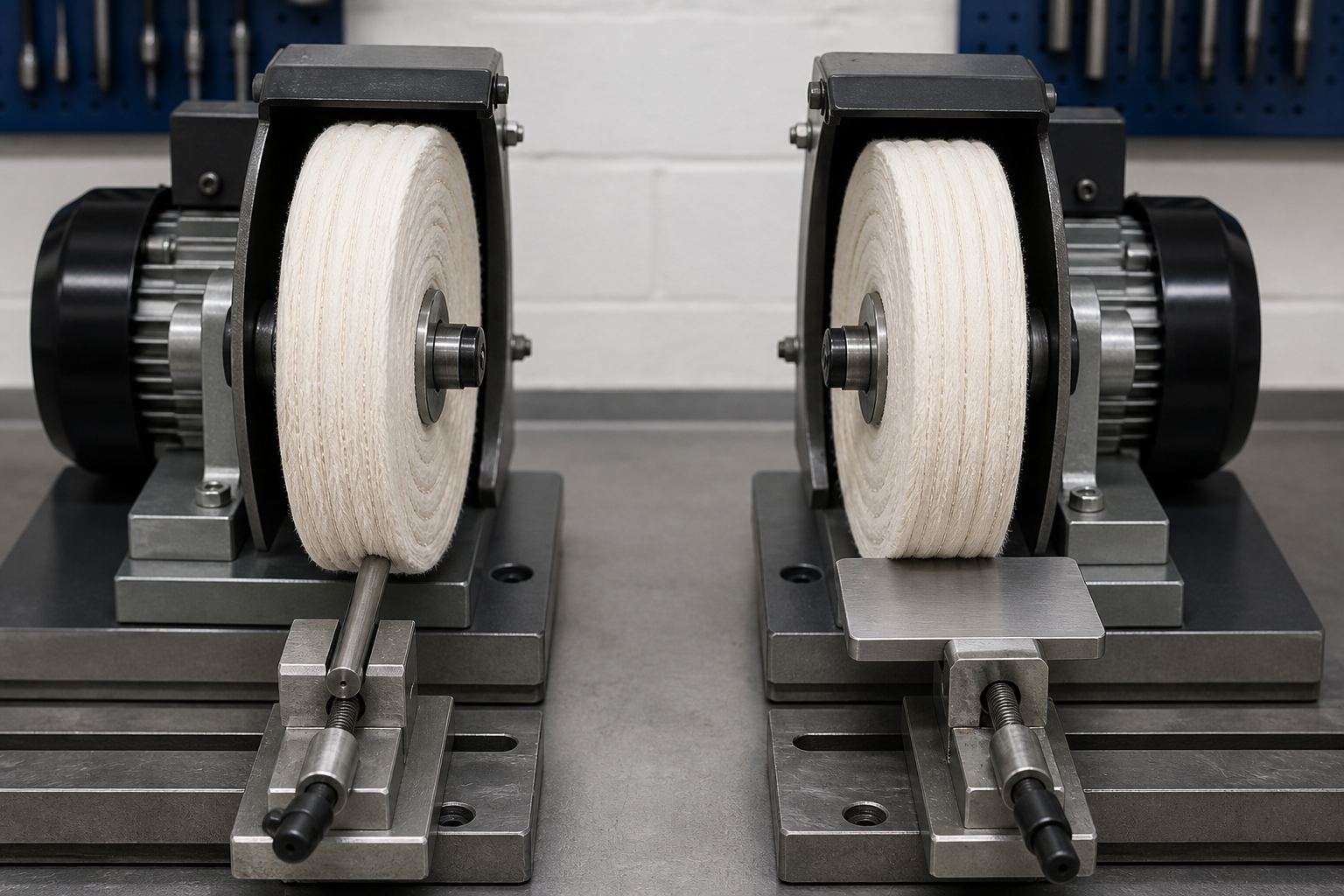
Platinum has three independent process options. After preparation approximately to P800–P1000, the first stage may use LUXI Black; after preparation approximately to P2000–P3000, it may use LUXI Gray. In both cases, all visible marks from the last abrasive must be fully removed before LUXI Pink, the surface must be cleaned, and LUXI Pink must be used on a separate clean white unstitched Calico wheel. The third option is an independent two-wheel LUXI Green process: first a firmer stitched wheel, then—after cleaning, cooling, and inspection—a separate clean softer unstitched wheel. The exact fabric type for the LUXI Green wheels is not inserted. The two-wheel LUXI Green process is not a mandatory stage before LUXI Pink.
On stainless steel and Co–Cr, select the stronger first stage according to preparation, hardness, and actual surface condition. LUXI Black and LUXI Gray are more active first-stage options; LUXI Black on sisal provides stronger action. If the surface after LUXI Gray is even and fully free of visible marks from the last abrasive, a direct transition to LUXI Pink is possible. When a softer transition is needed, LUXI Yellow may be used on a separate clean white stitched Calico wheel after LUXI Black or LUXI Gray. LUXI Yellow is not mandatory after every use of LUXI Gray. Use a separate clean tool for every compound and apply LUXI Pink only after cleaning on a white unstitched Calico wheel.
Test each titanium grade first. If the surface remains stable under standard conditions, use LUXI Pink on a clean white unstitched Calico wheel at 2500–3000 rpm for a wheel approximately 150 mm in diameter, with short passes and continuous temperature control. If standard conditions cause overheating, waves, or orange peel, choose LUXI Green instead in a low-temperature process. LUXI Pink and LUXI Green are alternative finishing choices, not consecutive stages. The low-temperature setting of approximately 1000 rpm belongs to the separate LUXI Green branch and must not be transferred to LUXI Pink.
On palladium white gold, LUXI Pink may perform finishing after a first stage selected for the actual hardness of the particular alloy. No universal abrasive grade or universal first-stage compound is established for every palladium white-gold alloy. Move to LUXI Pink only after the selected first stage has been fully completed.
On zamak, pewter, zinc and tin alloys, aluminium, magnesium, and lead, LUXI Brown performs the first stage. Before changing to LUXI Pink, LUXI Brown must have fully removed all visible marks from the last abrasive, formed an even slightly lustrous surface, and preserved the item’s geometry. After cleaning, use LUXI Pink on a separate clean white unstitched Calico wheel. Short passes, temperature control, and avoidance of excessive pressure are especially important on soft metals.
On selected hard bronzes, LUXI Pink may follow a fully completed LUXI Yellow first stage when a more pronounced mirror finish is required. This branch does not apply to every bronze and does not make LUXI Pink mandatory after every use of LUXI Yellow. Use a separate clean white unstitched Calico wheel for LUXI Pink.
LUXI Pink is not a universal mandatory stage before electroplating, PVD, or another future coating. When a particular approved production process uses LUXI Pink before coating, clean and inspect the surface completely so that no compound residue remains. Do not mechanically polish a thin existing layer if it must be preserved. Identify an unknown coating first. A sufficiently thick stable layer may be assessed only for general suitability for mechanical polishing after a test; a successful general assessment does not itself create a positive LUXI Pink recommendation.
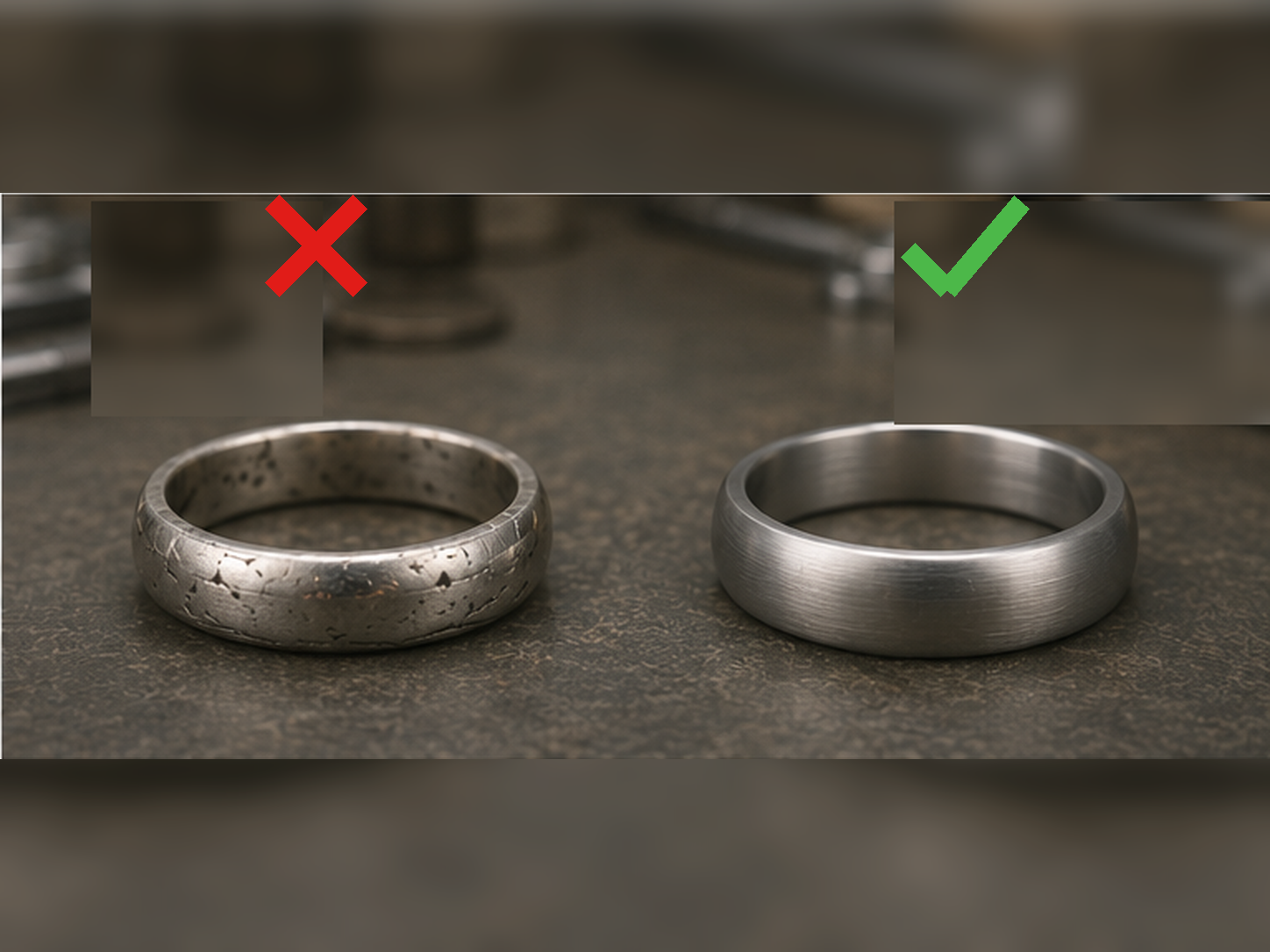
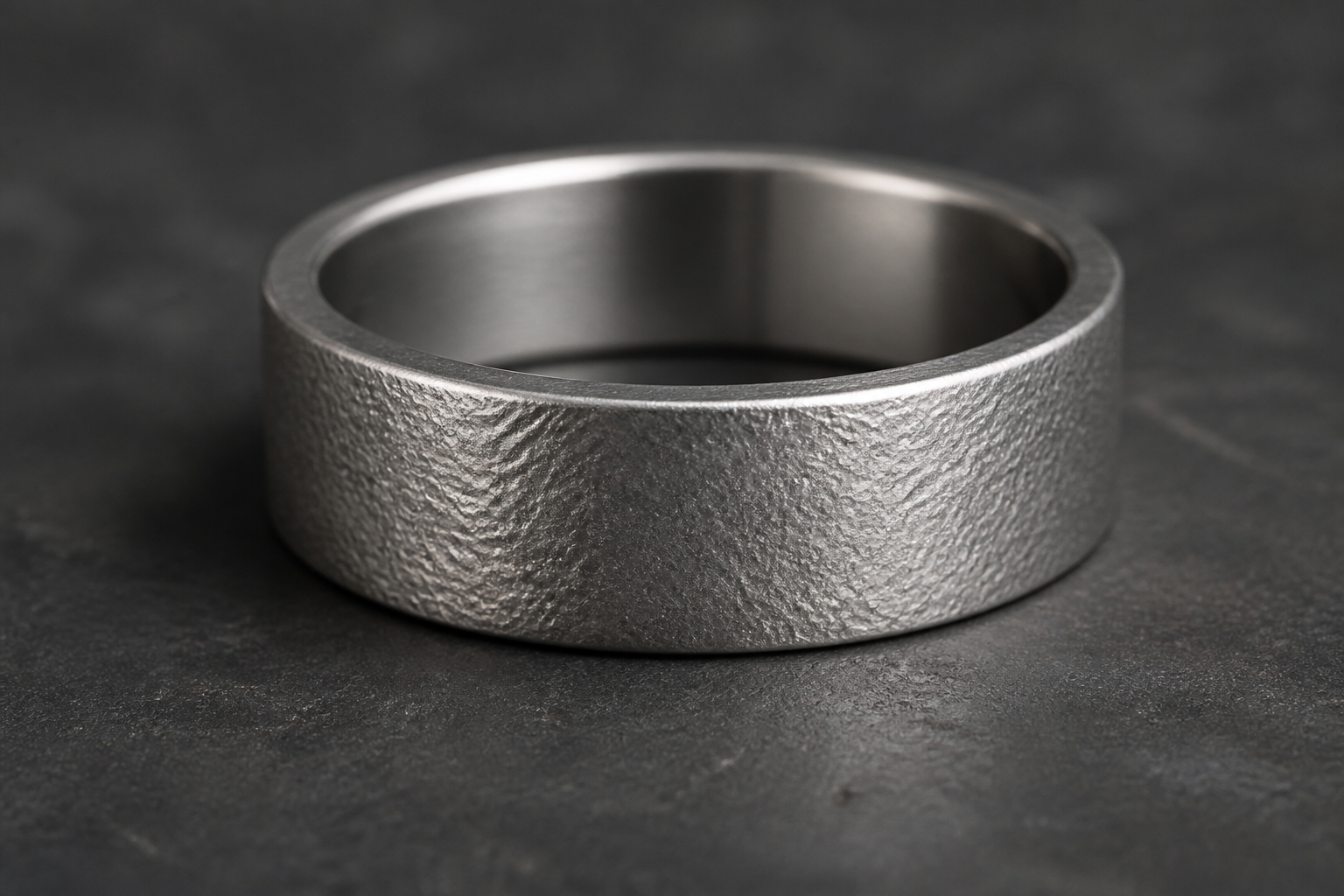
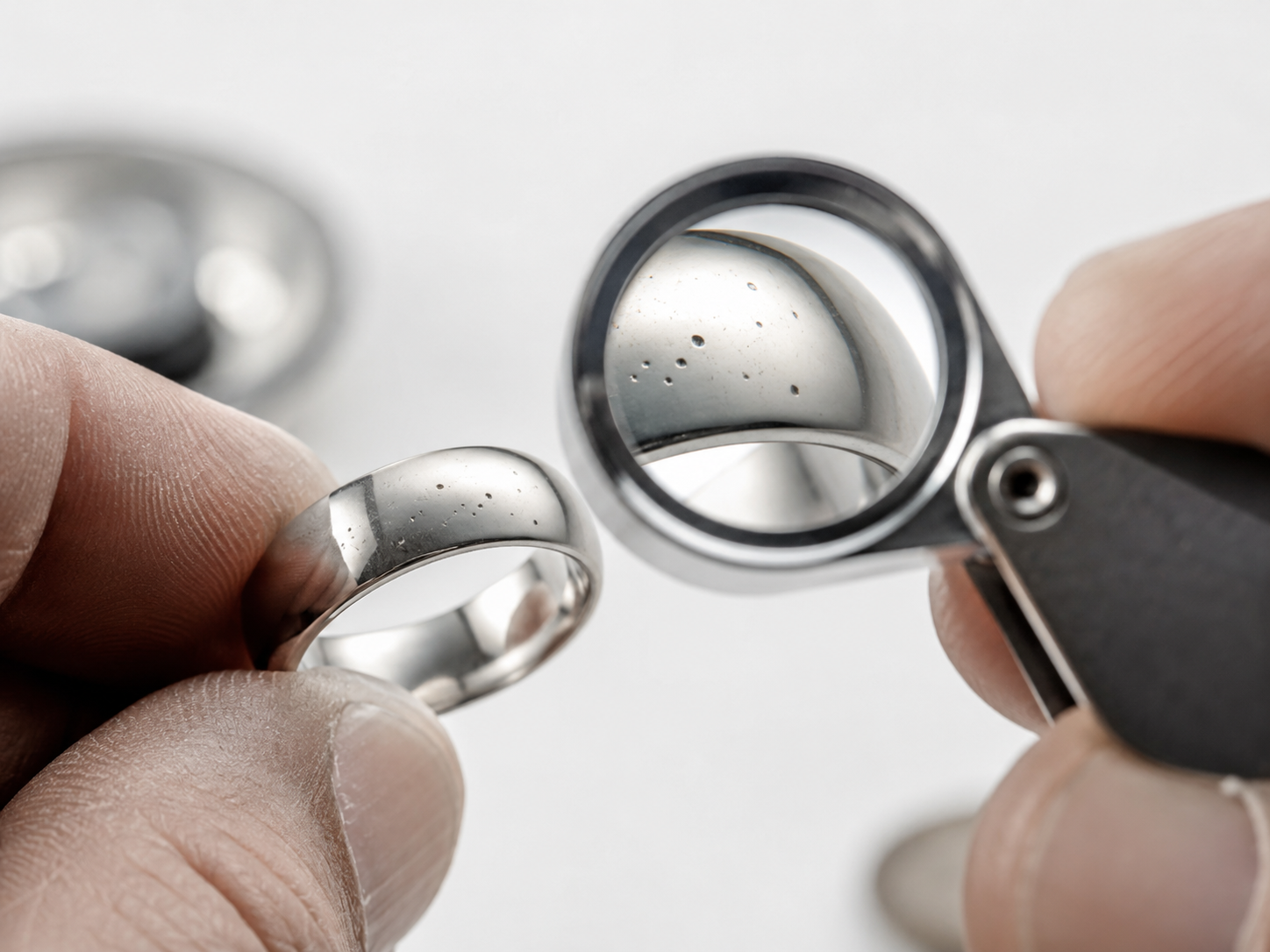
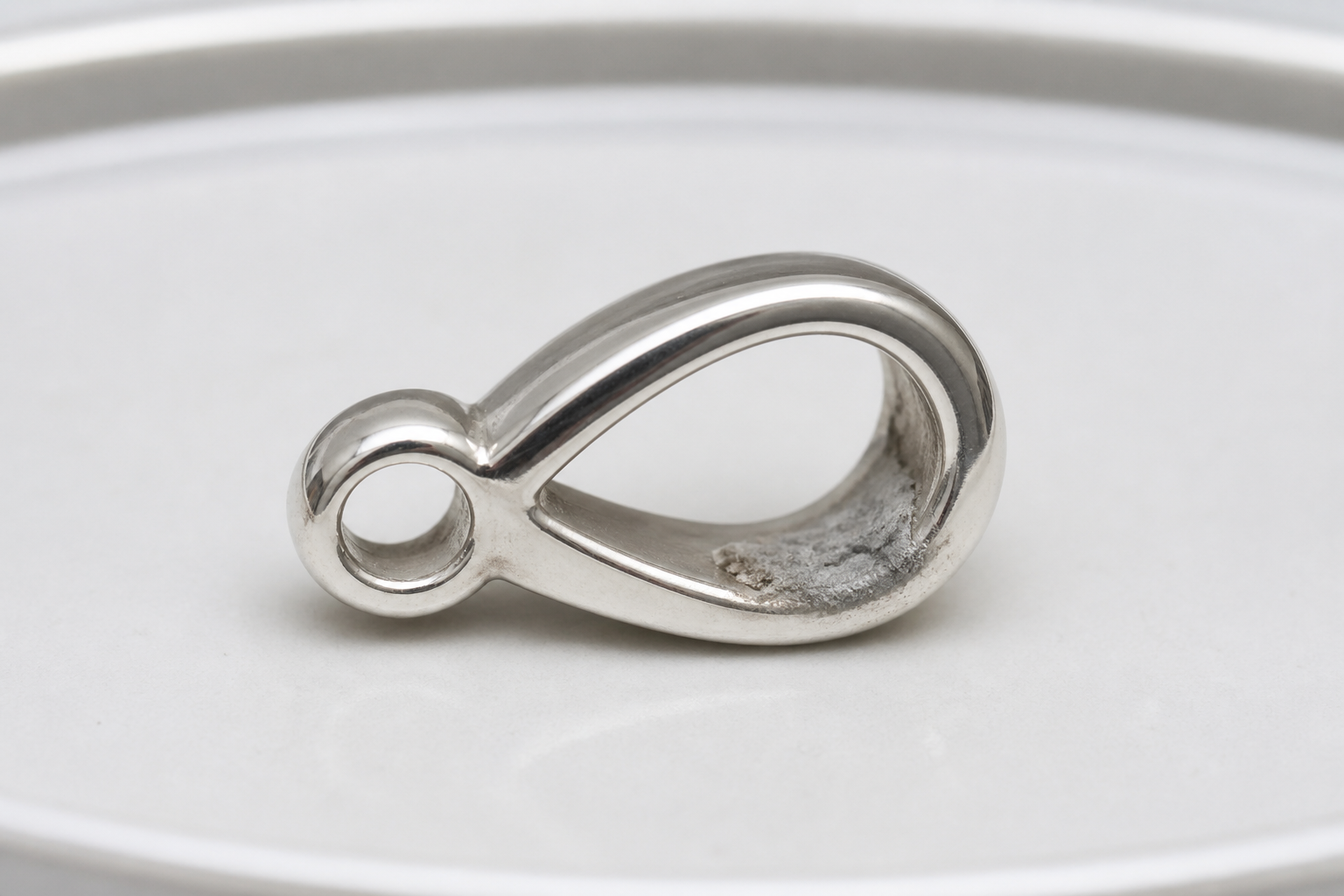
Polishing with LUXI Pink is complete when, after all compound has been removed and the item has cooled, the surface has an even mirror reflection, lustre is uniform, dull areas and marks from the previous stage are absent, and edges, relief, and intended geometry remain intact. Lustre on a compound-contaminated surface is not sufficient. The result must remain stable after cleaning and cooling.
If LUXI Pink does not produce an even mirror result, check in sequence: completion of abrasive preparation; completion of the first stage; selection of the previous compound; remaining scratches and dull areas; wheel type; use of a white unstitched Calico wheel; wheel cleanliness; amount of LUXI Pink; rpm; wheel diameter; contact area; pressure; pass duration; temperature; cleaning quality; and surface condition after cooling. Do not automatically add more LUXI Pink, increase pressure, or prolong continuous contact.
Stop work if waves or orange peel appear on titanium; if overheating becomes noticeable; if edges are lost or relief is smoothed; if cloudiness increases; or if lustre becomes unstable after cooling. Stop also if pores, cracks, or cavities open, a defect reappears after cleaning, or there is risk to a coating, stones, inserts, settings, or item construction. Return such cases to preparation, repair, or assessment of suitability instead of intensifying finishing.
After LUXI Pink, remove compound and removed material completely, allow the item to cool, and inspect the clean surface under directed light. Check flat areas, edges, relief, recesses, inside corners, joints, and spaces around stones and inserts. Use a separate clean tool for another compound. LUXI iClean, ultrasonic washing, heated solution, solvent, and steam are not prescribed automatically: select the cleaning method for the material, item construction, coating, inserts, and next operation.