

 Integrated Polishing System
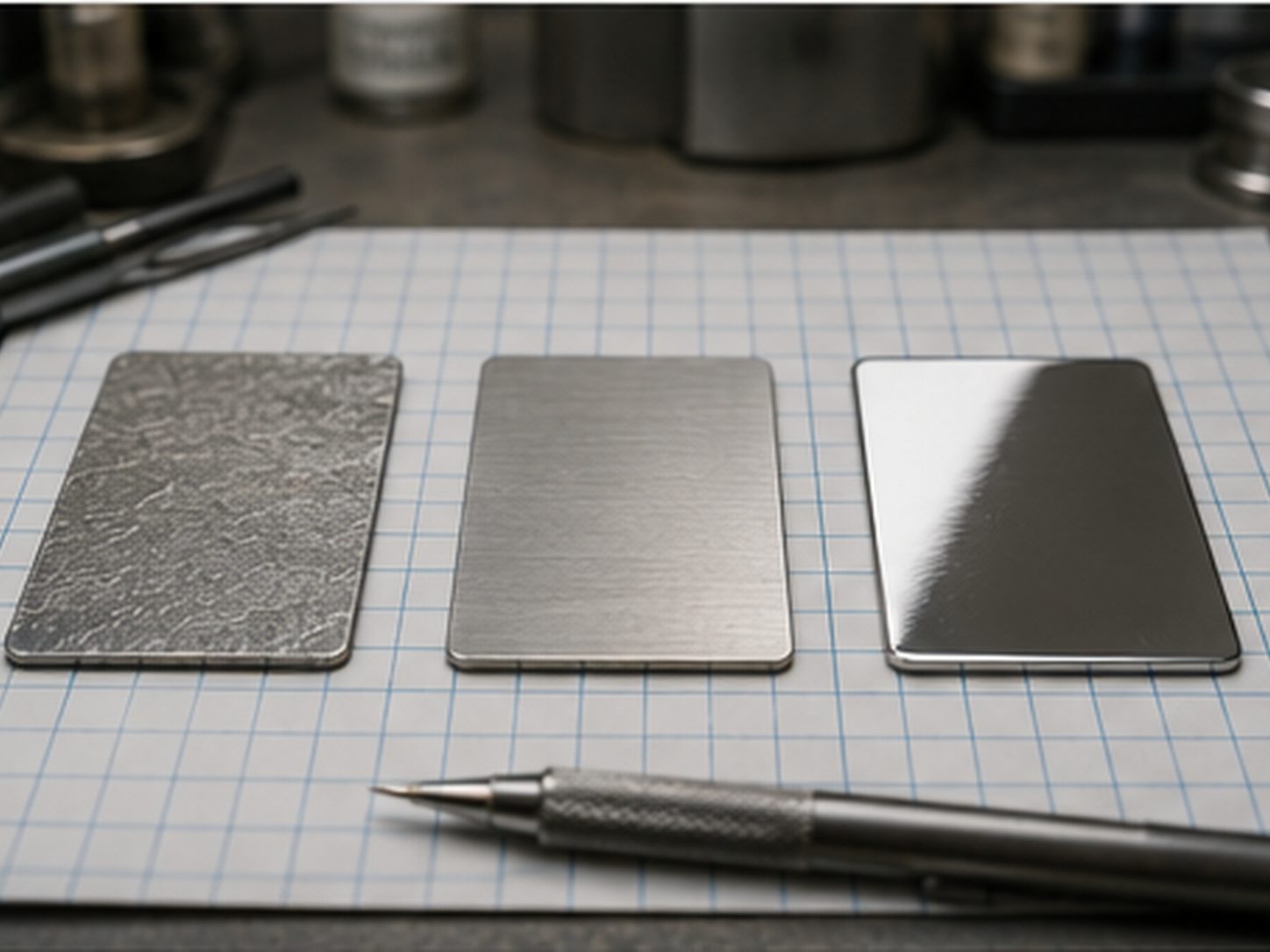
An item should enter the LUXI polishing process after basic mechanical preparation is complete: high spots are reduced, sprue remnants are removed, obvious protruding defects are lowered and the surface is close to the intended geometry. From this point the LUXI system controls compound choice, wheel choice, polishing route, intermediate inspection, final polishing, cleaning and pre-coating considerations.
Before polishing, defects should be separated into high spots above the nominal surface, ordinary surface scratches, deep defects, defects hidden by grinding scratches and defects too large to remove economically. After hard abrasive work, directional or chaotic scratches may hide pores, cavities, deep scratches, inclusions and local depressions. LUXI recommends a short diagnostic polish with LUXI Super Fine White to suppress abrasive noise and reveal the true surface condition. This is an inspection step, not final polishing.
Deep defects must be evaluated by size, depth, location, visibility and economic repair logic. If a valuable item has a large local defect, laser repair may be justified: weld the defect, remove excess metal, restore geometry and return to the normal process. If repair is not justified, reject or remelt the item before wasting more polishing time.
Material selection starts with two major groups. first-group materials includes copper alloys, brass, bronze, silver alloys and most gold alloys. These usually follow normal jewellery-polishing logic: prepare to about 600-800 grit, first-stage polish, inspect, then final polish. second-group materials includes stainless steel, platinum, titanium, some zinc and tin alloys, unusual hard gold alloys, silver-platinum alloys, experimental casting alloys, powder metallurgy and metal 3D printed items. second-group materials now follows a controlled route where preparation level, temperature, wheel choice and compound role are selected more carefully.
For first-group materials with average geometry and about 800 grit preparation, the base route is LUXI Blue with a yellow stitched buff, followed by LUXI Super Fine White with a white unstitched flannel buff. Filigree and delicate details reduce metal removal by using LUXI Blue with a white stitched buff. Large planar surfaces increase first-stage aggressiveness by replacing the first-stage compound: LUXI Blue, then LUXI Yellow, then LUXI Gray, then LUXI Black, and only then LUXI Black with a sisal buff if needed. More aggressive compounds replace less aggressive first-stage compounds; they are not automatically added as extra preliminary stages.
After first-stage polishing, the surface should be bright and free from visible scratches. Fine defects may be closed or softened by surface-layer movement. The surface can look like butter spread over bread: it covers underlying roughness but still needs smoothing to become optically refined. Final polishing should be soft, not aggressive. Use LUXI Super Fine White for standard high lustre, or LUXI Orange for premium finish, pre-electroplating, pre-PVD or easier cleaning after polishing. These recommendations apply to LUXI compounds and workflows, not visually similar third-party compounds.