

Technology

Classification of Polishable Materials in the LUXI System

How LUXI groups materials by polishing behaviour: first-group materials, second-group materials, polymers, coatings, and special cases.

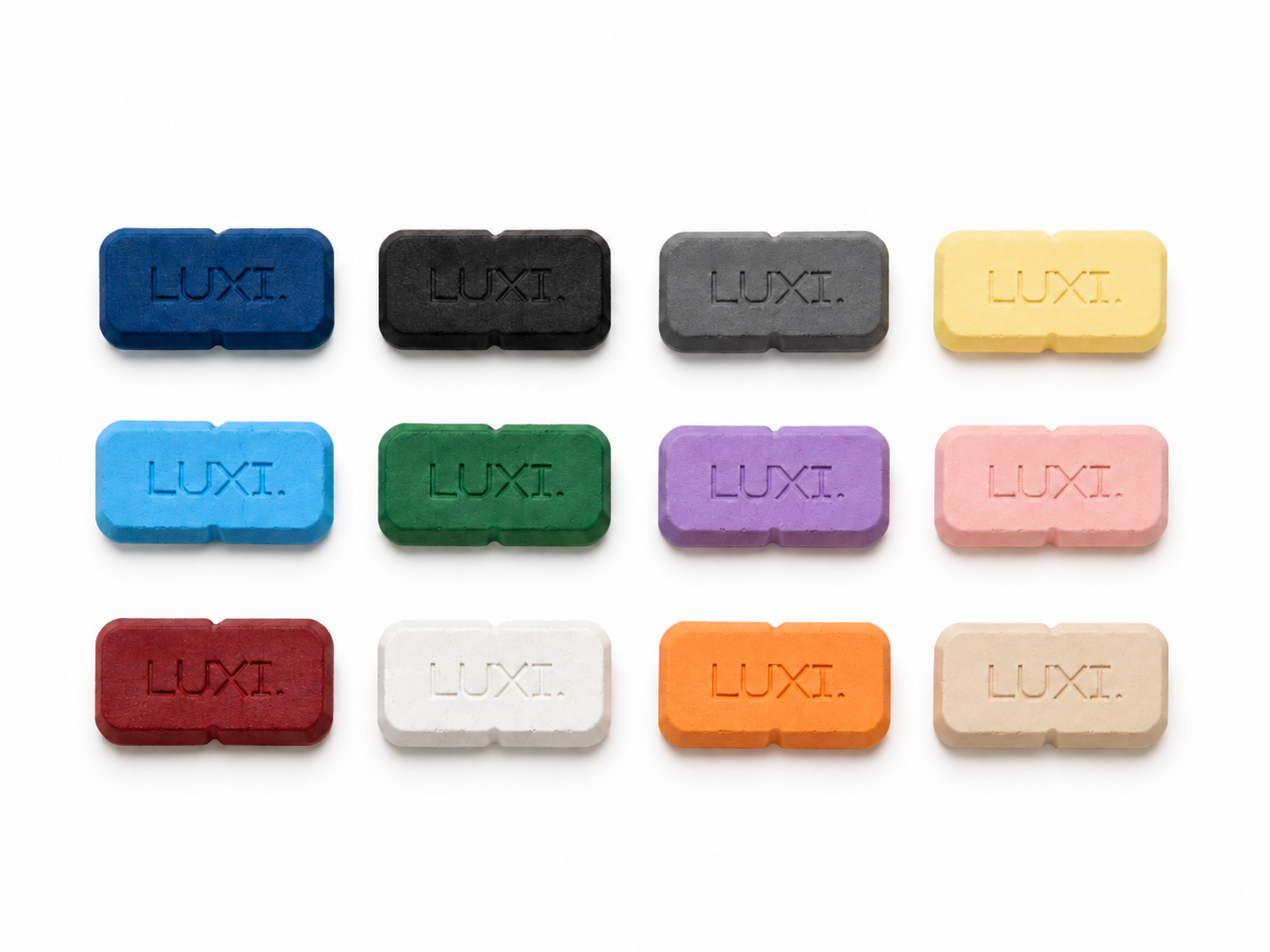
LUXI Sample Assortment full composition

Why material classification matters

Material classification in the LUXI system is not a ranking of value and not only a hardness scale. It describes how a surface behaves during polishing: temperature, pressure, compound aggressiveness, surface-layer stability, overheating risk, cleaning and preparation before coating.

The same compound and wheel can behave differently on a familiar gold alloy, stainless steel, titanium, polymer or plated surface. Classification gives the operator a controlled starting point before choosing a polishing scheme.

First-group materials

First-group materials are alloys that usually work well with the base LUXI scheme after correct abrasive preparation. This group includes gold, silver, copper alloys, brass, bronze and common jewellery alloys with similar polishing behaviour.

The typical first stage is LUXI Blue after preparation around 600-800 grit. If the surface, geometry or contact area needs stronger first-stage action, escalation can move through LUXI Yellow, then LUXI Gray, then LUXI Black. Final polish follows only after the first-stage surface is prepared and inspected.

Second-group materials

Second-group materials require more careful control of temperature, pressure, compound aggressiveness, wheel choice and contact time. This is not only a hardness category. It also describes materials with more sensitive, reactive, unstable or hard-to-predict surface behaviour.

Typical cases include stainless steel, titanium, platinum, palladium, palladium white gold, cobalt-chrome / Co-Cr, zamak, pewter, zinc and tin alloys, unusual hard or reactive alloys, and powder metallurgy or metal 3D printed parts where the surface behaviour is difficult to predict. These materials may need aggressive preparation, controlled first-stage polishing, low-temperature logic or special final polishing depending on surface condition.

Polymers

Polymers sit outside the metal group logic. They include epoxy materials, polycarbonate, acrylic / PMMA / acrylic glass, polyester resins, UV resin and 3D-printed resin prototypes. Polyurethane should be treated as a separate testing case because it may not follow the standard polymer scheme.

The key risk is heat. For most polymer work, wet sanding is preferred before polishing. The LUXI starting scheme is usually LUXI Brown followed by LUXI Beige, with low speed, short controlled contacts and frequent inspection.

Coatings

Coatings are not just another alloy. Electroplated surfaces, PVD, plated layers and matte coatings have their own thickness, adhesion, heat sensitivity and cleaning risks. Polishing can remove or change a coating if the process is too aggressive.

Before and after coating, cleaning matters. LUXI Orange can be relevant for premium clean final polishing before electroplating, PVD or final inspection. LUXI Green may be useful for gentle low-temperature work where a soft controlled contact is needed. LUXI iClean supports controlled cleaning after LUXI polishing when the material and coating status allow it.

Unknown or special materials

If the material is unknown, do not assume first-group behaviour. Start with testing, use the LUXI Sample Assortment where appropriate, document the result and adjust the process from observed behaviour.

When in doubt, treat the material as a second-group or special case until testing proves that the normal first-group scheme is safe and effective.

How to use this classification

Use this classification before choosing a polishing scheme, before using the selector and when reading workflows or the process tree. When a page refers to first-group or second-group materials, this article explains what that means.

The classification is a starting point. Testing, inspection, surface condition, wheel choice, tool speed, contact area and operator control still decide the final working parameters.