

Technology

Polymer Polishing Route

Low-speed polishing route for epoxy, acrylic, polycarbonate, polyester and UV-resin materials using LUXI Brown and LUXI Beige.

Polymer Polishing: LUXI Brown → LUXI Beige

Materials covered by this route

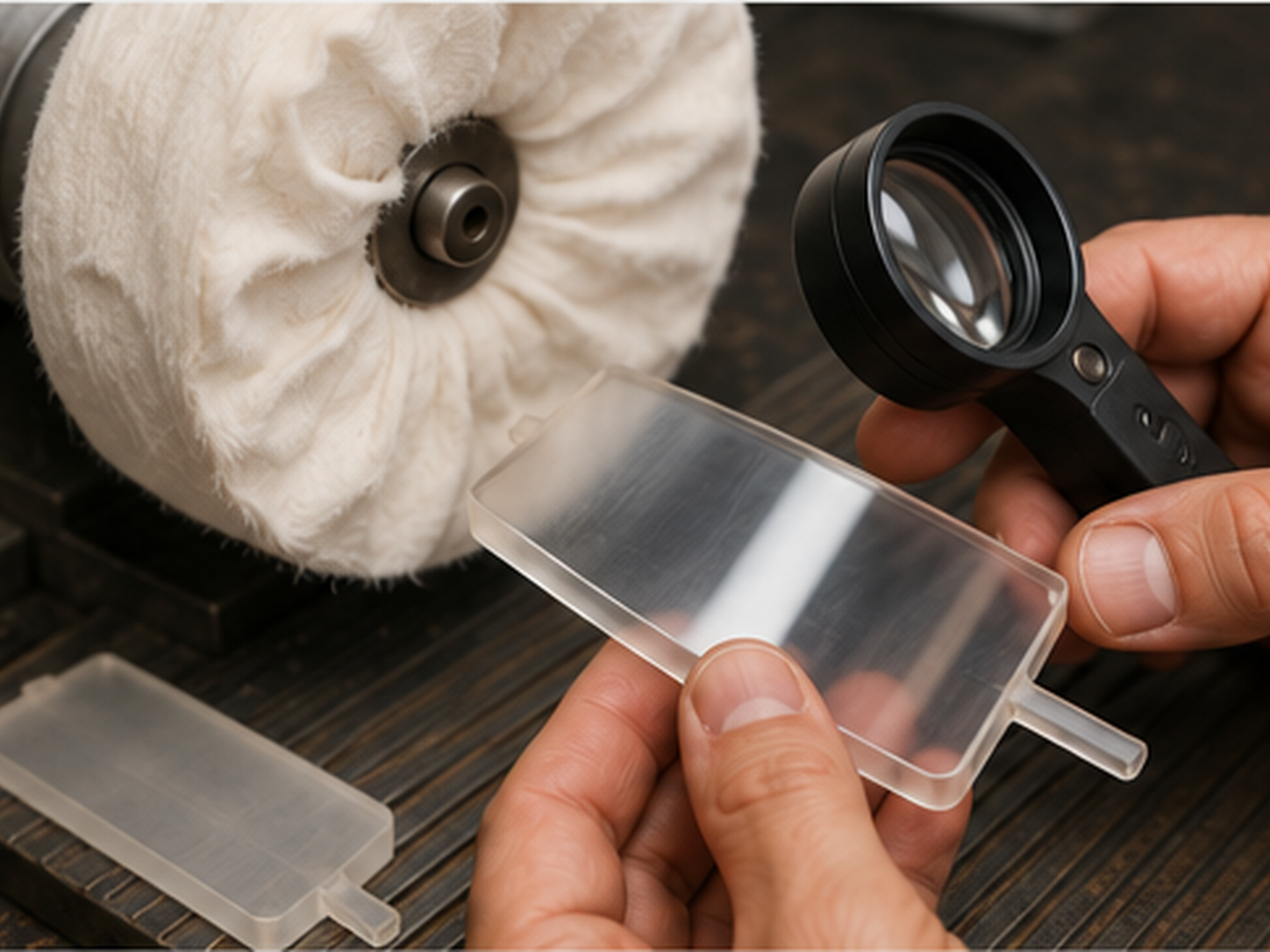
This LUXI polymer route is intended as a controlled starting procedure for epoxy polymers, epoxy enamels, polycarbonate, eyeglass lenses, scratched compact discs, polyester resins, acrylic polymers, PMMA, acrylic glass, UV-cured acrylic resins and 3D-printed acrylic UV resin prototypes.

Polymers do not all behave the same. The exact route depends on the polymer type, curing level, filler, coating, geometry, prior sanding and heat sensitivity. Use this route as a controlled starting point, not as a guarantee that every polymer will respond identically.

Polyurethane requires separate testing

Hard polyurethane is usually not recommended for this route because it often has high abrasion resistance and may not respond well to normal polishing logic. Polyurethane should be treated as a separate test case, and it should not be assumed to follow the standard LUXI Brown -> LUXI Beige polymer route without separate testing.

Overheating is the main process risk

Polymers are extremely sensitive to overheating. When the surface becomes too hot, the polymer can soften, smear, form a dirty mobile mass, clog the abrasive, open an unprocessed lower surface, create haze or reveal deeper scratches.

For polymers, heat control matters more than simply increasing compound aggressiveness. Work with low speed, short controlled contacts and frequent inspection. If the material starts to move, smear or soften, stop and reduce pressure, speed or contact time before continuing.

Wet sanding before polishing

For most polymers in this route, wet sanding is preferred before polishing because it cools the surface, reduces clogging of abrasive paper, removes dust and chips, and gives better control before the polishing stages.

Prepare the surface by wet sanding to about 800-1000 grit before LUXI polishing. Wet sanding lowers local heat, reduces gum-up, keeps abrasive paper cleaner, removes dust and chips, gives a smoother surface before polishing, reduces the risk of new deep scratches and limits dust exposure, which is especially important when working with epoxy and polyester materials.

Test the heat limit on scrap material

Before polishing an unfamiliar polymer, test on a scrap piece of the same material. It is useful to deliberately overheat a small test area once, so the operator understands where the material starts to soften, smear or move.

Use that observation as the limit to avoid on the real item. This is especially important for UV-cured resins, unknown acrylics, repaired lenses and polymer parts with uncertain curing history.

Stage 1: LUXI Brown on white stitched muslin

After wet sanding to about 800-1000 grit, use LUXI Brown with a white stitched muslin buff at about 1000 rpm. Work with short controlled contacts. The goal is to remove sanding haze, remove remaining fine scratches and create a smooth surface without overheating.

Do not try to get final gloss immediately during the Brown stage. The Brown stage prepares the polymer for the final Beige stage.

Use white stitched muslin as the default first-stage wheel for this polymer route. Yellow stitched muslin is firmer because it is starched, and Calico is firmer and more structured. White stitched muslin gives enough form for the first stage while remaining safer and softer for heat-sensitive polymers.

Stage 2: LUXI Beige final polishing

At low speed, both white unstitched flannel and white unstitched muslin can be used for the LUXI Beige final stage. The difference is less critical than heat control, short contact time and avoiding excessive pressure.

Use LUXI Beige at 500-1000 rpm with short controlled contacts. The goal is to produce gloss and finish the polymer gently without smearing. Stop if the surface begins to drag, soften or become dirty.

Final inspection and gentle cleaning

After polishing, inspect for haze, remaining scratches, smearing, melted or dragged surface, and any lower unprocessed layer opened by heat or over-polishing. Clean gently. If controlled cleaning is needed and the material allows it, use a mild route such as LUXI iClean rather than unnecessarily aggressive ultrasonic conditions.